Table of Contents
ToggleDelaware, Ohio experiences distinct seasonal weather patterns that directly impact your home’s gutter system. Spring rains, summer thunderstorms, and especially fall leaf drop mean your gutters are working overtime to channel water away from your foundation. Neglecting gutter cleaning in Delaware, Ohio isn’t just about aesthetics, it’s about protecting your roof, walls, and basement from water damage. This guide walks you through why regular maintenance matters in your climate, when to tackle the job, and how to do it safely.
Key Takeaways
- Regular gutter cleaning in Delaware, Ohio prevents costly water damage to your roof, foundation, and basement by managing seasonal weather challenges like spring rains, fall leaves, and winter ice dams.
- Clean your gutters twice yearly—once in late October through mid-November and again in late March through early April—to align with Delaware’s seasonal weather patterns and debris accumulation.
- Use basic tools like a plastic gutter scoop, heavy-duty gloves, a stable ladder with a standoff bar, and a garden hose to safely clean gutters yourself while following proper ladder safety practices.
- During gutter cleaning, inspect for damage such as sagging sections, loose hangers, and rust spots, and ensure downspout extensions direct water at least 4–6 feet away from your foundation.
- Clogged gutters create breeding grounds for mosquitoes and accelerate rust and deterioration, while the cost of gutter cleaning is minimal compared to water damage repairs that can run thousands of dollars.
Why Regular Gutter Maintenance Matters In Delaware
Delaware’s location in central Ohio means you get the full spectrum of weather challenges. Heavy spring rains can overwhelm clogged gutters, backing water up under your roof fascia and into your soffit. Fall leaf drop is relentless, and winter ice dams form more easily when gutters are blocked with debris that traps moisture.
Clogged gutters cause foundation settling, basement flooding, and rotting soffit boards. Water pooling in gutters also becomes a mosquito breeding ground by mid-summer. Beyond pest issues, standing water accelerates rust formation on steel gutters and deteriorates aluminum gutter seams.
The cost of fixing water damage, new foundation grading, basement waterproofing, or roof repairs, runs thousands of dollars. Regular gutter cleaning costs pennies by comparison. Your gutters are designed to move water: when they’re blocked, they’re working against your home instead of for it.
Best Time To Clean Your Gutters In Delaware, Ohio
Delaware’s seasonal calendar dictates a two-primary-cleaning schedule. Most homeowners in the region perform deep gutter cleaning twice yearly, once in late fall and once in early spring. Some with heavy tree coverage add a mid-summer pass if needed.
Timing is critical. A cleaning too early in fall means leaves keep dropping until November. A cleaning too late risks ice dam formation by mid-January. Spring cleaning needs to happen before the May and June rains.
Fall Cleaning: Preparing For Winter
Perform fall gutter cleaning in Delaware between late October and mid-November, after most leaves have dropped but before frost hardens debris. This is the most important cleaning of the year, leaves, twigs, and seed pods clog gutters faster than any other season.
Check your gutters after heavy wind events, too. A single storm can deposit weeks’ worth of debris overnight. Clear gutters prevent ice dams during the freeze-thaw cycles of Delaware winters. When gutters are clean, water drains freely instead of pooling and freezing at the eaves.
Fall cleaning also gives you a chance to inspect for damage. Look for sagging sections, loose hangers, or rust spots. Catching these in November beats discovering them in February when repairs are harder to schedule.
Spring Cleanup: Starting Fresh
Spring cleaning in Delaware happens in late March or early April, before the heavy rains of May arrive. By this point, winter has loosened debris, and any ice-dam damage becomes visible. You may find shingle granules, bird nests, or winter-loosened pine needles packed into gutters.
Spring cleaning is lighter than fall cleanup in most years, but don’t skip it. A single clogged section can back water onto your roof during a heavy downpour, and Delaware regularly sees rain events of 1–2 inches in a single storm. The goal is ensuring water moves freely from roof to downspout to ground.
Use spring cleaning as a maintenance check. Verify downspout extensions direct water at least 4–6 feet away from your foundation. Reattach any gutters that winter winds may have shifted.
DIY Gutter Cleaning: Tools And Step-By-Step Instructions
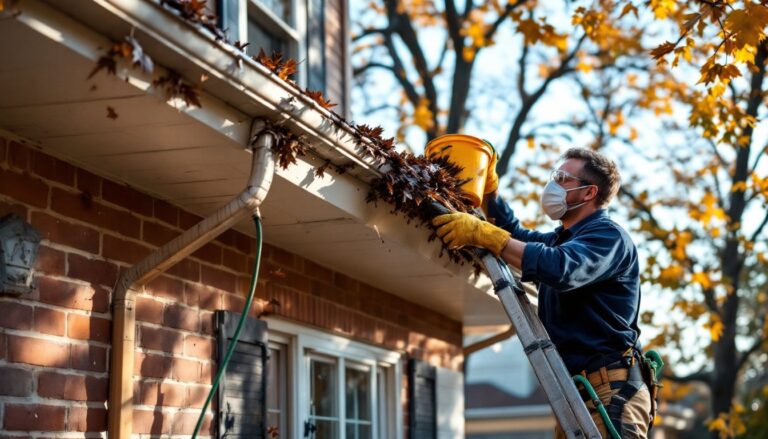
You don’t need expensive equipment to clean gutters yourself. Most homeowners in Delaware handle the job with basic tools and a few safety precautions. Professional contractors exist if you’re uncomfortable working at heights, but the fundamentals are straightforward.
Essential Tools You’ll Need
- Ladder (20–24 feet for single-story homes: 28+ feet for two-story). A ladder stabilizer or standoff bar prevents the ladder from damaging gutters.
- Work gloves (heavy-duty leather or nitrile). Gutters accumulate sharp metal edges, rust, and decomposing debris.
- Safety glasses to protect eyes from debris kicked up while scooping.
- Trowel or gutter scoop (plastic or aluminum). A plastic gutter scoop is safer for aluminum gutters: avoid metal scoops that can dent or perforate.
- Bucket or ground tarp to catch debris. A 5-gallon bucket tied to the ladder is easier than making multiple trips down.
- Hose with a spray nozzle for flushing. A pressurized spray wand accelerates rinsing but keep pressure under 40 PSI to avoid damaging gutter seams.
- Dust mask if you’re sensitive to mold or debris dust.
- Straightedge or level (optional but useful for checking gutter slope).
Safe Cleaning Technique From Start To Finish
1. Inspect your ladder and set it safely. Place the ladder on level ground, not on soft soil or gravel. Never lean a ladder against gutters: use a standoff stabilizer to keep it 1 foot away from the gutter edge. A second person should hold the base or maintain visual contact. Working alone on a ladder is how homeowners end up in an emergency room.
2. Work section by section from one end. Start at the downspout. Hand-scoop debris into your bucket, working toward the opposite end. Don’t try to clear the entire gutter in one pass: two passes from each end ensures nothing is missed.
3. Clear downspouts next. If water won’t drain from a downspout, run a garden hose up from the bottom to flush blockages. If the clog won’t budge, remove the downspout elbow (usually held with two sheet-metal screws) and clear the pipe manually. Reattach and test with water.
4. Flush thoroughly with the hose. Once gutters are scooped, use a hose set to medium pressure to rinse away fine sediment. Watch how water drains. It should move smoothly toward downspouts without pooling.
5. Inspect while you clean. Look for sagging gutters, loose fasteners, rust, or gaps at seams. If you find standing water in a gutter after rinsing, that section may have lost slope, note it for repair.
6. Check downspout extensions. Make sure water exits 4–6 feet from your foundation. Use extensions or buried drain lines if water is pooling near the house.
If you find structural damage, a gutter pulling away from the fascia, extensive rust, or seam separation, call a contractor. Repairing hangers or replacing a section is beyond basic DIY for most homeowners. Professional gutter services in Delaware can usually handle repairs during a cleaning visit.
According to best gutter cleaning services reviewed locally, Delaware homeowners who perform regular cleaning between professional inspections catch problems early and avoid costly repairs.
For cost estimation on gutter repairs or larger projects, tools like HomeAdvisor and ImproveNet let you request quotes from local contractors and compare pricing. If you’re uncomfortable working at heights or your home is two-plus stories, professional cleaning every one to two years is a reasonable insurance policy against water damage.