Table of Contents
ToggleFort Wayne’s weather, from spring storms to heavy fall leaf cover, puts serious stress on your home’s gutters. Regular gutter cleaning isn’t just a cosmetic chore: it’s a critical maintenance task that protects your foundation, walls, and landscaping from water damage. Whether you’re tackling it yourself or hiring a professional, understanding what’s involved helps you make the right call for your home. This guide walks you through DIY gutter cleaning in Fort Wayne, covers the tools you’ll need, and spells out when it’s time to bring in the pros.
Key Takeaways
- Gutter cleaning in Fort Wayne should happen twice yearly—late spring and late fall—or three to four times for heavily treed homes, as neglected gutters lead to foundation damage, mold growth, and costly repairs exceeding $3,000.
- Essential DIY gutter cleaning tools include a ladder, gutter scoop, bucket, hose, and safety gear like gloves, glasses, and a dust mask; always use a second person and never lean directly on gutters.
- Fort Wayne’s harsh climate—heavy fall leaves, spring storms, and winter freeze-thaw cycles—makes gutter maintenance critical to prevent ice dams, structural damage, and water infiltration into your home.
- Always hire a professional gutter cleaner if gutters are pulling away from fascia, sagging, experiencing persistent standing water, showing rust or holes, or if your home is two stories or has a steep roof.
- Proper gutter flushing and downspout clearing prevent ice dam formation and water backups that expand in freezing temperatures, protecting fascia, soffit, and your home’s foundation from expensive damage.
- Regular gutter cleaning is a structural maintenance necessity in Fort Wayne, not a cosmetic chore—clean gutters direct water away from your home and prevent the compounding damage that turns small problems into major expenses.
Why Regular Gutter Cleaning Matters in Fort Wayne
Fort Wayne sits in a region that experiences significant seasonal changes, spring rains, summer storms, and autumns thick with deciduous leaves. Clogged gutters become water traps that damage your roof edge, fascia, and soffit. More critically, water cascading down the side of your house erodes the foundation, promotes mold growth in basements, and creates landscape sinkholes near your home’s perimeter.
Clean gutters direct water away from your home through proper drainage. Most homes need gutter cleaning twice a year: once in late spring after trees fully leaf out and wind brings early debris, and again in late fall after leaves drop. Homes surrounded by trees may need three or four cleanings annually.
Negligent gutter maintenance compounds over time. A plugged downspout means standing water freezes in winter, expanding ice dams that tear gutters from fascia and create roof leaks. Over a few seasons, that $200 DIY job becomes a $3,000+ repair bill.
Essential Tools and Safety Equipment You’ll Need
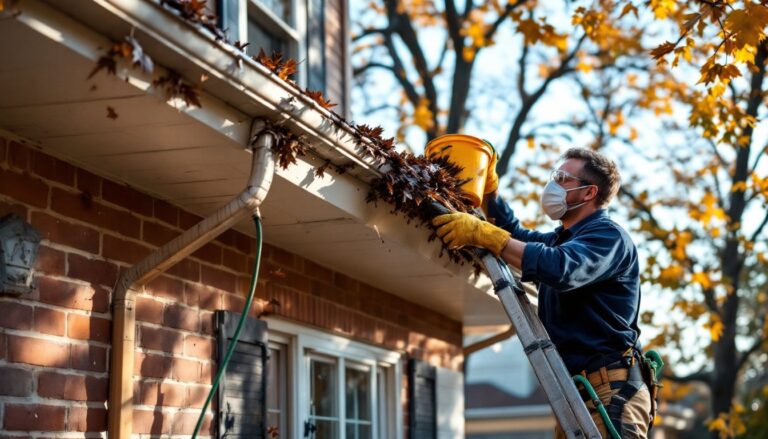
Before climbing a ladder, assemble your gear. You don’t need fancy tools, most jobs rely on basics you probably have in the garage.
Tools:
• Ladder (6- or 8-foot for single-story homes: 20-foot extension for two-story, though two-story is safest with a helper)
• Gutter scoop (curved dustpan-like tool) or garden trowel
• Bucket for debris (5-gallon, hung from ladder rung with carabiner)
• Hose with spray nozzle for flushing
• Downspout brush or plumbing snake for clogs
• Work gloves (nitrile or leather, not cloth, wet leaves are slippery)
• Safety glasses
• Dust mask (essential if gutters contain decomposed leaves or mold spores)
Safety Equipment:
• Helmet or hard hat (unexpected falls happen: one strike changes everything)
• Slip-resistant shoes with good ankle support
• Ear protection (if using a power blower later)
Never work alone, especially on a second-story roof. A second person steadies the ladder and can call for help if needed. Today’s Homeowner offers seasonal repair guides that include tool checklists and safety reminders for gutter work.
Step-by-Step Guide to Cleaning Your Gutters Yourself
Preparation and Safety Setup
Start on a dry day, wet gutters and ladders are a dangerous combo. Position your ladder at a slight angle (about 75 degrees from ground) against the fascia, making sure the base is stable on flat ground. Never lean a ladder directly against the gutter: it bends the metal and risks a fall.
If your gutters attach to a metal roof edge, avoid placing full body weight on the gutter itself. Instead, grip the fascia or nearby gutter bracket. Attach a bucket to the ladder rung at your waist level using a carabiner or rope, your hands stay free for balance.
Put on your gloves, safety glasses, and dust mask before climbing. A decomposed leaf buildup can harbor mold spores and insect nests: the mask keeps debris out of your lungs.
Removing Debris and Flushing the System
-
Scoop out large debris. Start at the downspout end and work backward using a gutter scoop. Drop leaves, twigs, and sediment into your bucket. Gutters often hold 2–3 inches of compacted organic matter: don’t rush. Take breaks if you’re on a tall ladder.
-
Flush the gutters. Once you’ve removed bulk debris, use a hose with spray nozzle set to medium pressure and flush away from the downspout first. This loosens fine sediment and moss. Then flush toward the downspout to clear the channel.
-
Clear the downspout. Spray water into the top of the downspout: if it backs up or slows, you’ve got a clog. Use a plumbing snake or downspout brush to break the blockage. For severe clogs, disassemble the bottom elbow and flush from below, or call a professional if the clog is deep inside the downspout run.
-
Check for leaks. Once water flows freely, look for leaks at seams. Small drips at corner joints often mean the sealant has failed. Note any leaks for later patching with silicone caulk.
-
Inspect the fascia and soffit. While you’re up there, check the wood fascia and soffit for rot, soft spots, or water stains, signs of long-term leak damage that may need replacement. HomeAdvisor’s cost estimator tool can help you gauge fascia repair costs in your area.
Common Fort Wayne Weather Challenges for Gutters
Fort Wayne’s climate is tough on gutters year-round. Spring storms bring debris and test drainage systems that survived winter. Summer heat causes expansion and contraction in metal gutters, loosening fasteners and opening seams.
Fall leaf drop is the big one. Most Fort Wayne homes are surrounded by oaks, maples, and birches. A mature oak can drop 200+ pounds of leaves over six weeks. Gutters fill fast, and wet, decomposed leaves turn into a sludge that blocks downspouts and promotes mold growth.
Winter freeze-thaw cycles are brutal. Residual water in gutters freezes, expands, and pulls gutters away from the fascia. Ice dams form when gutters back up, and water flows under the roof edge, causing attic leaks. Fort Wayne’s average winter lows dip to 20°F, creating multiple freeze-thaw cycles per season.
Heavy snow loads in January and February can strain gutter brackets. If you haven’t cleaned gutters in fall, the weight of snow plus ice buildup can tear gutters off the house. This is why fall cleaning in Fort Wayne is non-negotiable, it’s not cosmetic, it’s structural maintenance.
Signs Your Gutters Need Professional Attention
DIY cleaning is great for routine maintenance, but some conditions call for a professional. If you see any of these red flags, hire a licensed gutter contractor:
Structural damage: Gutters pulling away from fascia, sagging sections, or fasteners popping out mean the gutter system needs realignment or replacement. This requires flashing knowledge and proper fastening to prevent future leaks.
Persistent standing water: If water pools in a section even after flushing, the gutter is not pitched correctly. Professionals can re-pitch or repair low spots without replacing the whole run.
Extensive mold or algae: Black streaks and fuzzy growth suggest moisture trapped behind the gutter, pointing to rot in the fascia or soffit. A professional can identify and treat the root cause.
Rusted gutters or holes: Pinhole leaks and rust perforation mean the gutter metal is failing. Patching works short-term, but replacement is often more cost-effective than repeated repairs.
Two-story homes or steep roofs: If your home has a second story or a roof pitch steeper than 6:12, the fall risk from a ladder jump significantly. Fort Wayne gutter cleaning pros have equipment and insurance for steep roofs.
Downspout clogs deeper than 10 feet: If your downspout disappears underground or runs into a dry well, DIY snaking won’t work. Professionals use powered augers and high-pressure flush systems to clear buried downspouts.
Time or physical limitation: If you’re not comfortable on ladders, have mobility issues, or simply don’t want to spend a Saturday on the roof, paying for professional cleaning is money well spent. Expect $150–$350 per cleaning for a typical Fort Wayne home, depending on roof size and debris load.