Table of Contents
ToggleBrooklyn’s unique weather, from heavy spring rains to autumn leaf season, means gutters work harder here than in many other places. Clogged gutters are one of the easiest home maintenance problems to ignore, and one of the most expensive to fix later. Water backing up under your roof, pooling against your foundation, or rotting your fascia boards doesn’t happen overnight, but it happens fast once gutters stop draining. Whether you’re tackling this yourself or calling in help, understanding gutter maintenance keeps your Brooklyn home protected and saves thousands in water damage repairs down the road.
Key Takeaways
- Gutter cleaning in Brooklyn is essential to prevent costly damage, as clogged gutters lead to foundation problems ($5,000–$25,000+) and roof rot that could cost $15,000–$40,000 to repair.
- Clean your gutters in late October or early November before winter rains, and again in spring (April–May); homes with heavy tree coverage may need three cleanings annually.
- DIY gutter cleaning requires a sturdy extension ladder, work gloves, a bucket, and garden hose, but hiring professionals ($150–$400 for single-story homes) is safer if you’re uncomfortable on ladders or have a steep roof.
- Install gutter guards or leaf filters ($1,500–$3,000 for an average home) to reduce debris accumulation by 70–80% and cut cleaning frequency in half.
- Watch for warning signs year-round including water cascading off gutter edges, visible sagging, or daylight between the gutter and fascia, which indicates immediate water drainage problems behind your home’s framing.
Why Regular Gutter Cleaning Matters for Brooklyn Homeowners
Your gutters have one job: move water away from your roof, fascia, and foundation. When they’re clogged with leaves, sediment, and debris, they fail at that job, fast. Water pools on your roof and seeps under shingles, leading to rot in your decking and attic framing. It overflows down your exterior walls, staining siding and soaking into your foundation, which can crack or settle unevenly over time.
Brooklyn homes, many built 50–100 years ago, are especially vulnerable. Older foundations settle, gutters sag, and any water pooling at the base accelerates damage. A foundation repair runs $5,000 to $25,000+. Roof replacement, $15,000 to $40,000. A gutter cleaning? $150 to $400, depending on your roof size and debris load. The math is brutal but simple: regular cleaning prevents catastrophic repairs.
Clogged gutters also create perfect conditions for pests. Mosquitoes breed in standing water, and birds nest in debris-packed gutters. Mold and mildew thrive in damp, organic matter. Over time, rust develops on metal gutters, especially in Brooklyn’s humid climate and exposure to salt spray near the coast.
When to Clean Your Gutters: Seasonal Timing and Warning Signs
The standard advice, spring and fall, works for Brooklyn, but timing matters more than just the calendar. Fall is your critical season here. Trees shed leaves September through November, and that debris accumulates fast in gutters. A single heavy downpour on clogged gutters can cause backups within days.
Clean gutters in late October or early November, after most leaves have dropped but before winter rains. Spring cleaning (April–May) removes winter debris, ice dam sludge, granules from shingles, and preps gutters for summer thunderstorms.
If you live under trees, you may need three cleanings a year. Watch for these warning signs year-round: water cascading off gutter edges during rain, visible sagging sections, overflowing downspouts, water stains on fascia boards, or gutter seams pulling apart. If you see daylight between the gutter and fascia, the gutter is separating and needs immediate attention, this means water’s draining behind it, right onto your house framing.
DIY Gutter Cleaning: Step-by-Step Instructions for Homeowners
Many homeowners clean their own gutters. It’s doable, but it’s physical work and comes with real risk. Know your limits, if you’re uncomfortable on a ladder or your roof pitch is steep, hire professionals.
-
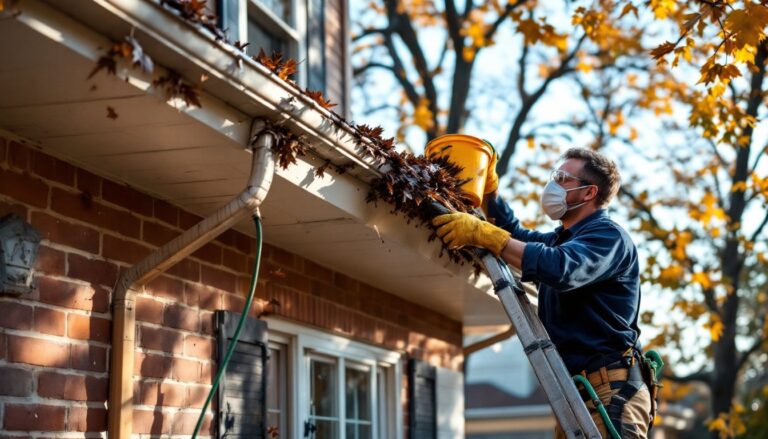
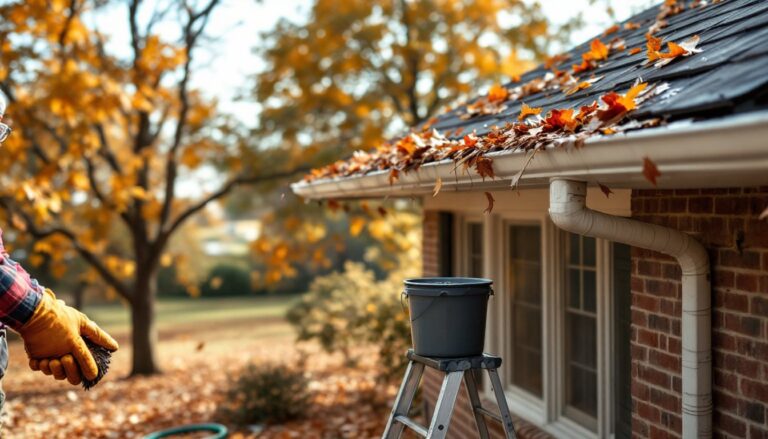
Gather your materials: A sturdy 20–28 foot extension ladder (taller homes need longer), work gloves (leather or nitrile, preferably ones that won’t get slippery when wet), a hand scoop or small shovel, a 5-gallon bucket for debris, a garden hose with a spray nozzle, and a tarp to catch runoff if needed.
-
Set up safely: Place your ladder on flat, level ground. Have a second person stabilize it. Never lean more than 12 inches to either side, reposition the ladder instead. Wear slip-resistant shoes and consider a rope belt tied to an anchor if you’re uncomfortable with heights.
-
Remove debris: Starting at a downspout corner, scoop out leaves, twigs, and sludge into your bucket. Work along the gutter toward the opposite downspout corner. Soggy, decomposed leaves become heavy sludge, don’t underestimate the weight.
-
Flush the gutters: Once loose debris is out, use your garden hose to flush gutters from the far end toward the downspout. Watch water flow down the downspout. If it doesn’t drain, use a plumbing snake or a straightened coat hanger to clear the downspout from above.
-
Check downspouts: Make sure downspouts discharge 4–6 feet from your foundation. If water pools at the base, extend downspouts with elbows or flexible extensions.
Safety Tips and Essential Tools You’ll Need
Ladder work is the biggest risk in gutter cleaning. Always wear eye protection (goggles), leaves and debris fly up when flushing, and work gloves to prevent cuts from metal edges or sharp twigs. Wet debris is slippery: don’t rush.
Wear long sleeves to protect arms from sharp edges and insects. If you’re sensitive to mold or mildew, use a respirator mask rated for organic particles (N95 or better). Your gutters may host bird nests or wasp nests, look before you reach in, and never force debris if a nest is present.
Essential tools: extension ladder, scoop or small shovel, work gloves, bucket, garden hose with spray nozzle, wire brush (for rust spots), and a Level to check if gutters are sagging. A shop vac with a gutter-cleaning attachment speeds work and contains mess, but it’s optional. Never use a pressure washer on gutters, the force can damage seams or bend aluminum.
Professional Gutter Cleaning Services in Brooklyn: When to Call the Experts
Hire professionals if your home is over two stories, your gutters are severely sagging, you’re uncomfortable on ladders, or you have extensive tree coverage. Brooklyn has plenty of local gutter cleaning companies, many are bonded and insured, which matters if someone gets hurt on your property.
Expect to pay $150–$400 for a standard single-story home, $300–$600 for two stories, depending on the roof size and debris load. Some companies charge per linear foot ($0.50–$1.50 per foot). Prices vary by neighborhood and season: winter rates are often lower because fewer leaves fall.
When hiring, ask for references, proof of insurance, and a detailed estimate. A pro should inspect gutters for damage, separated seams, rust, sagging sections, and recommend repairs. Many gutter companies bundle cleaning with minor repairs (resealing seams, replacing a downspout elbow) at reasonable rates. Compare estimates on platforms like HomeAdvisor or Angi, where homeowners post reviews of local contractors. Get at least three quotes. Legitimate companies don’t ask for cash-only payments or demand full payment upfront.
Preventing Future Gutter Problems: Maintenance and Upgrades
Regular cleaning prevents most gutter problems, but upgrades can reduce the work. Gutter guards (mesh screens or insert-style covers) reduce debris accumulation by 70–80%. They’re not foolproof, fine sediment and pollen still enter, but they cut cleaning frequency to once or twice yearly instead of three or four times. Guards cost $8–$20 per linear foot installed, or $1,500–$3,000 for an average home. They pay for themselves over 10 years in saved labor and repairs.
Another option: leaf filters (helmeted gutter covers that channel water under a solid cover). These are pricier ($15–$30 per foot) but handle heavy leaf loads better. Both require professional installation.
Inspect gutters twice yearly, spring and fall, for separation, rust, or sagging. Resealing gutter seams with silicone-based gutter sealant ($10–$20 per tube) prevents leaks before they worsen. Patch rust spots on metal gutters with rust converter and touch-up paint to extend life.
If gutters sag more than 1 inch over a 10-foot span, they need resupporting. Existing brackets can be tightened or replaced. Severe sagging indicates the gutter needs replacement, an investment worth discussing with a contractor using resources like ImproveNet for cost guidance. Vinyl and aluminum gutters last 20–30 years: copper, 50+ years but costs more upfront.
Conclusion
Gutter cleaning isn’t glamorous, but it’s the most effective home maintenance task you can do. Brooklyn’s weather and aging housing stock make it non-negotiable. Clean gutters twice yearly, inspect seasonally, and don’t hesitate to hire professionals when the job is beyond your comfort or ability. A small investment in prevention saves you from five-figure repair bills and keeps your home’s structural integrity intact for decades to come.