Table of Contents
ToggleA slow drain or sudden backup is one of those frustrations that hits every homeowner eventually, and in Long Beach’s older neighborhoods, it happens more often than you’d think. The good news? You don’t always need to call a plumber right away. Many clogs respond to simple DIY drain cleaning methods that take less than an hour and cost just a few dollars. The trick is knowing which techniques work for what, and more importantly, when a clog signals something deeper that requires professional help. This guide walks you through the most reliable drain cleaning strategies, straight talk about what you can handle yourself, and practical ways to keep Long Beach’s salt-air and mineral-heavy water from wrecking your pipes down the road.
Key Takeaways
- Drain cleaning in Long Beach can often start with simple DIY methods like baking soda, vinegar, and hot water before calling a professional plumber.
- Long Beach’s saltwater air, mineral-heavy water, and older cast-iron pipes create unique conditions that make drain clogs more frequent than in other areas.
- A plumbing snake or hand crank auger ($15–$40) effectively handles tough clogs caused by hair and soap, but motorized equipment and chemical cleaners should be avoided by inexperienced homeowners.
- Professional drain cleaning services in Long Beach range from $150–$300 for basic clearing to $400–$800 for sewer inspection and hydro-jetting, which is especially effective for mineral scaling and grease buildup.
- Monthly preventive maintenance—using drain screens, avoiding grease disposal, and flushing with hot water—eliminates most future clogs and saves thousands in emergency repairs.
- Recurring clogs, multiple slow drains, or sewage backups signal structural problems requiring professional camera inspection and diagnosis rather than DIY solutions.
Why Long Beach Drains Get Clogged
Long Beach’s unique environmental factors make drain clogs more common than in other areas. The saltwater air accelerates corrosion inside older pipes, narrowing the interior and trapping debris more easily. Many homes built before the 1980s have cast-iron drain lines: these rust and create rough surfaces that catch hair, soap scum, and grease like a sieve.
Minerals in Long Beach’s water, particularly calcium and magnesium, also build up inside pipes over time, especially in hot water lines. Unlike newer plastic (PVC) pipes, older galvanized steel plumbing is prone to mineral buildup and interior scaling. Add in the typical culprits, hair accumulation in bathroom drains, cooking grease cooling inside kitchen traps, and soap residue, and you’ve got a perfect storm.
Tree roots seeking moisture can also infiltrate sewer lines in Long Beach’s established neighborhoods. If clogs recur frequently in the same drain or affect multiple fixtures at once, a root intrusion or collapsed section of sewer line may be the real problem, not just a buildup you can clear yourself.
DIY Drain Cleaning Methods You Can Try First
Before you pull out heavy equipment or call for a camera inspection, try these low-risk, low-cost methods. They work best for partial clogs caused by soap, hair, or grease, not for total blockages or structural problems.
The Boiling Water And Baking Soda Technique
Start simple: boil a kettle of water and pour it slowly down the drain. The heat can dissolve grease buildup and flush loose debris. Wait 5 minutes, then sprinkle ½ cup of baking soda directly into the drain. Follow immediately with 1 cup of white vinegar. You’ll hear fizzing, that’s the chemical reaction breaking down buildup. Cover the drain with a plug or cloth for 15 minutes to keep the reaction working inside the pipe, not escaping into the air.
Flush with hot water again. This method works particularly well for slow kitchen drains clogged with grease residue. It’s safe for all pipe materials, including older cast iron, and won’t damage septic systems. Repeat weekly as preventive maintenance if your drains tend to slow gradually.
Using A Plumbing Snake Or Auger
For tougher clogs, a hand crank plumbing snake (also called a drain auger) is your next move. These cost $15–$40 at any home center and work on hair and soap clogs that baking soda alone won’t budge. Remove the drain cover and feed the snake down the pipe, cranking slowly. You’ll feel resistance when you hit the clog. Keep cranking: the snake’s spiraled tip will either hook hair and pull it out or break the clog apart.
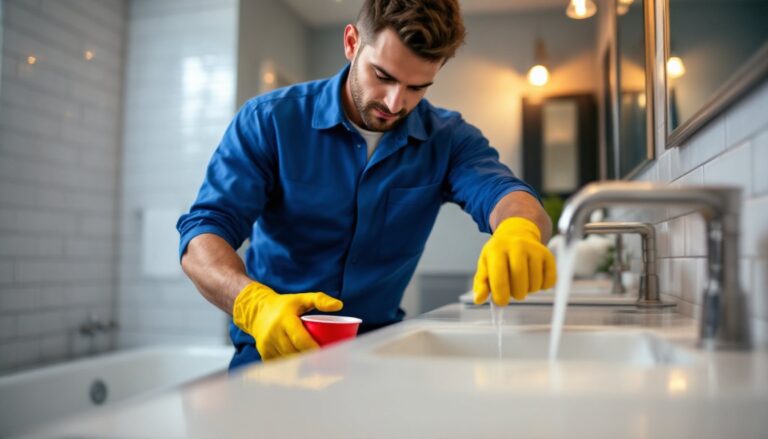
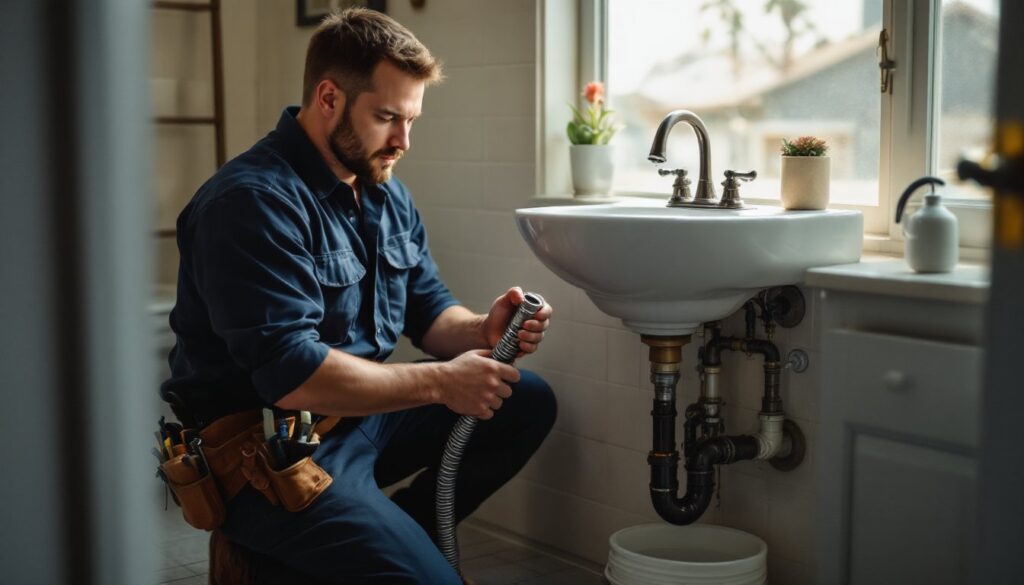
Remove the snake and flush hot water down the drain. For bathroom drains, remove the P-trap, the curved section under the sink, first. Place a bucket underneath to catch water, unscrew the slip nuts on both ends, and empty any visible hair or gunk. Reattach with fresh thread seal tape on the connections.
Don’t use a motorized auger if you’re unfamiliar with it: they can twist wrists or drive clogs deeper if mishandled. If the snake reaches the main sewer line and you feel serious resistance, stop, that’s when a professional with a camera and powered equipment should take over. Avoid chemical drain cleaners: they’re caustic, ineffective on solid blockages, and can damage old pipes.
Professional Drain Cleaning Services In Long Beach
Call a pro if your DIY attempts fail, if clogs return within weeks, or if multiple drains back up simultaneously. Long Beach has no shortage of licensed plumbers, and services like top-rated drain cleaners in Long Beach can handle everything from simple camera inspections to sewer line repairs.
Professional plumbers use motorized augers and hydro-jetting, high-pressure water that scours pipe walls clean. A hydro-jet is especially effective for stubborn grease buildup and mineral scaling in Long Beach’s older homes, and it doesn’t risk damaging pipes the way aggressive snaking can. Most plumbers will run a video camera down your main sewer line first to identify the exact problem location and severity.
Costs vary: a simple service call and drain clearing typically runs $150–$300 in Long Beach. A full sewer inspection and hydro-jet can run $400–$800. Tree root removal or pipe replacement is significantly more. Get quotes from at least two plumbers and ask if they’re licensed by California’s Contractors State License Board (CSLB). Don’t rely on price alone: read reviews and confirm they’re insured.
If you’re uncertain whether a project is DIY or professional territory, home improvement cost estimators and contractor matching services can give you a sense of typical regional costs and help you decide whether to hire.
Preventing Future Drain Problems
The best drain is one that never clogs. Monthly maintenance takes just minutes and saves thousands in emergency calls.
Use drain screens or hair catchers in every shower and tub. They cost under $2 and catch hair before it enters the pipe. Clean them weekly. In the kitchen, avoid pouring grease down the drain: let it cool in a container and throw it in the trash. Rinse dishes before loading the dishwasher.
Run hot water through your sink drain after each use, not boiling (it can crack older porcelain), but hot enough from the tap. This keeps grease from setting inside the pipe. Once a month, repeat the baking soda and vinegar flush described above as preventive maintenance, especially if you live in an older Long Beach home.
If you have a garbage disposal, use it sparingly. Disposals are notoriously hard on drain systems: they shred food into paste that accumulates inside pipes. Run plenty of cold water while using it, and never force it, if something jams, stop, disconnect power, and clear it by hand.
For your main sewer line, avoid planting large trees near the line’s path (roots follow moisture). Have your sewer inspected by camera every 3–5 years if you’re in an older neighborhood: catching early issues beats emergency ruptures. Resources like Family Handyman’s plumbing maintenance guide offer detailed preventive strategies tailored to your home’s age and layout.
Conclusion
Most Long Beach drain clogs yield to simple, inexpensive methods: baking soda and vinegar, a hand crank snake, or just hot water. Start there before calling for backup. But don’t ignore the signs, recurring clogs, multiple slow drains, or sewage backups mean something structural is wrong and needs professional diagnosis. The cost of a camera inspection and proper repair now beats the cost of raw sewage in your yard later. Keep screens in your drains, don’t pour grease, and flush monthly with hot water. Your pipes will thank you.