Table of Contents
ToggleBrisbane’s subtropical climate brings heavy rainfall, especially during storm season, which means your gutters work overtime to keep water away from your home’s foundation and walls. Clogged gutters filled with leaves, twigs, and debris can lead to water damage, mold growth, and costly repairs that far exceed the effort of regular cleaning. Whether you’re a hands-on DIYer or tackling this chore for the first time, gutter cleaning in Brisbane doesn’t require fancy equipment, just a practical approach, the right safety setup, and about an hour or two of your time. This guide walks you through everything you need to know to keep your gutters flowing freely year-round.
Key Takeaways
- Gutter cleaning in Brisbane should be performed at least twice yearly—ideally in spring (September–October) before wet season and autumn (March–April) after heavy rains—to prevent water damage, mold, and costly repairs.
- Brisbane’s subtropical climate and wet season create blockages from leaves, debris, and fine dust that can lead to structural damage, mosquito breeding grounds, and interior staining if left unaddressed.
- Essential gutter cleaning equipment includes a stable extension ladder, work gloves, a gutter scoop, garden hose, bucket, safety glasses, and closed-toe shoes; professional services start around $150–$300 if climbing is unsafe.
- Follow a systematic cleaning process: inspect the gutter, remove loose debris by hand, loosen compacted buildup with a trowel, flush with a garden hose, clear downspout clogs, and inspect for damage requiring professional repair.
- Install gutter guards or micro-mesh screens to reduce debris accumulation by 60–70%, trim overhanging tree branches to at least 1–2 meters clearance, and extend downspouts 1.5–2 meters from your foundation to prevent long-term water damage.
- After severe Brisbane storms, inspect gutters within 48 hours for fallen branches, torn screens, or shifted sections that could worsen blockages during the next rainfall.
Why Regular Gutter Cleaning Matters In Brisbane’s Climate
Brisbane’s warm, humid subtropical climate creates the perfect storm for gutter problems. Between November and April, the region experiences its wet season, dumping significant rainfall that your gutters must handle efficiently. When gutters get clogged with leaves, seed pods from gum trees, and other debris, water can’t flow properly and backs up under your roof. This standing water invites mold, rots fascia boards, and can seep into your walls, leading to structural damage and interior staining.
Beyond the wet season, Brisbane’s dry months still present challenges. Gutters accumulate fine dust and organic matter that bind together, creating blockages that are tougher to clear than loose leaves. A blocked gutter also becomes a mosquito breeding ground, standing water is their favorite nursery. Regular cleaning prevents these issues before they become expensive problems. Most gutters should be cleaned at least twice yearly, though Brisbane homes benefit from three or even four cleanings if you have large trees overhead.
When To Clean Your Gutters In Brisbane
Timing matters as much as the work itself. The ideal schedule for Brisbane properties is spring (September–October) before the wet season arrives, and autumn (March–April) after heavy rains taper off. If you have large deciduous trees overhanging your roof, add a cleaning in mid-summer and again in late autumn when leaf drop peaks.
Don’t ignore warning signs. If you notice water spilling over gutter edges during rain, see dark stains on your fascia, or spot sagging sections, clean them immediately, don’t wait for your scheduled date. After Brisbane’s severe storms, inspect gutters within 48 hours. Fallen branches, torn screens, or shifted gutter sections can cause blockages that worsen rapidly with the next rainfall.
Keeping a simple calendar reminder, phone alert or sticky note on the fridge, prevents the “I’ll do it next month” cycle that leaves gutters neglected for years. Mark those twice-yearly dates and stick to them.
Essential Tools And Materials You’ll Need
You don’t need specialized gutter equipment to do this job well. Here’s what works:
Tools:
• A ladder (ideally an extension ladder, 6–8 meters tall) that reaches your gutter safely: ensure it’s in good condition
• Work gloves (leather or heavy-duty latex), gutters contain sharp debris and organic material
• A gutter scoop or small plastic shovel to dislodge debris
• A garden hose with a spray nozzle for final flushing
• A bucket to collect debris as you work
• A trowel for stubborn, compacted material
• Safety glasses to protect against splashing and debris
• Closed-toe shoes with good grip
Materials:
• Biodegradable gutter cleaner (optional, for stubborn buildup)
• Cloth rags for cleanup
• A flat broom (optional) for sweeping gutter bottom before hosing
If you’re uncomfortable on a ladder or your roof pitch is steep, consider hiring a professional. Many Brisbane contractors offer gutter cleaning starting around $150–$300 depending on home size and debris load. Resources like HomeAdvisor provide cost estimates and contractor ratings in your area.
Step-By-Step Guide To Cleaning Your Gutters
Safety Precautions Before You Start
This isn’t just about avoiding a fall, it’s about doing the job with confidence and protecting yourself from injuries. Never lean sideways from a ladder: reposition it instead. Keep a second person nearby if possible to spot the ladder, especially on uneven ground. Check your ladder for cracks, bent rungs, or loose hardware before climbing: a broken ladder causes far worse problems than dirty gutters.
Wear eye protection and gloves without fail. Gutter debris harbors bird droppings, mold spores, and wasps’ nests: gloves keep bacteria and cuts at bay. A long-sleeved shirt or arm guard protects against scrapes. On hot Brisbane days, start early (6–8 a.m.) before the sun peaks, working on a ladder in 35°C heat invites dizziness and heat exhaustion. Take water breaks and never rush.
The Cleaning Process
Step 1: Set up and inspect. Position your ladder directly under the section you’re cleaning, ensuring it’s stable and feet are level. Spend a moment looking at the gutter before you touch it, identify debris clumps, nesting spots, or visible damage.
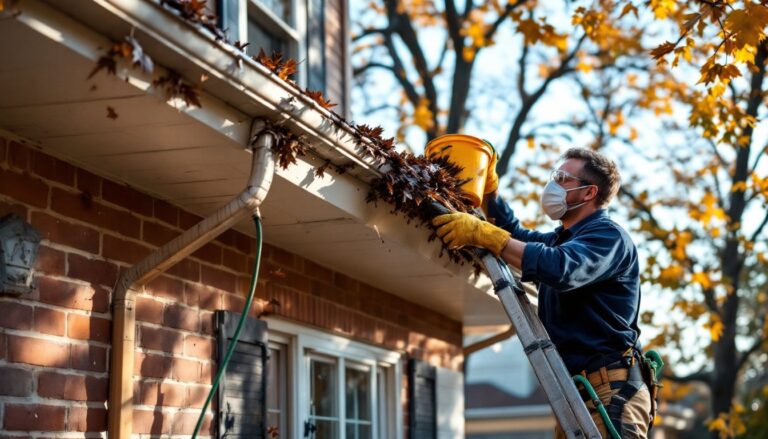
Step 2: Remove large debris by hand. Using your gloved hands or a gutter scoop, pull out leaves, twigs, and other loose material into your bucket. Work section by section along the gutter, moving the ladder as you progress.
Step 3: Loosen compacted buildup. Where debris has matted down or formed a stubborn layer, use your trowel or scoop to break it apart gently. Don’t gouge the gutter lining: you’re loosening, not excavating.
Step 4: Flush with water. Once the bulk is out, use your garden hose set to medium pressure to flush the gutter and downspouts. Watch water flow from the spout to confirm there’s no hidden blockage further down. If water backs up or drains slowly, there’s likely a clog in the downspout, see the next step.
Step 5: Clear downspout clogs. If water doesn’t flow freely, disconnect the downspout (usually just unscrews at the bracket) and use the hose to blast the clog upward. A plumbing snake can help dislodge stubborn blockages. Reattach once clear.
Step 6: Final inspection. Walk the entire gutter line. Look for sagging sections, rust spots, or cracks that signal repairs needed. If you see damage, consider calling in a professional roofer.
The whole process typically takes 1.5 to 2 hours for a single-story home, longer for multi-story properties. Today’s Homeowner offers seasonal maintenance checklists that include gutter cleaning reminders tailored to different climates.
Preventing Gutter Problems Year-Round
Cleaning twice a year keeps gutters healthy, but a few extras extend the intervals and reduce future headaches. Install gutter guards or screens to block large debris while allowing water through. Micro-mesh guards work well in Brisbane’s tropical climate, though they require occasional rinsing. They’re not foolproof, small leaves and organic matter still accumulate, but they cut cleaning frequency and debris volume by 60–70%.
Trim tree branches hanging over your roof. Even if you clean gutters regularly, overhanging limbs drop leaves constantly and block sunlight, encouraging moss growth. Aim for at least 1–2 meters of clearance above your roof line.
Inspect downspout extensions. Water should flow away from your foundation by at least 1.5–2 meters. Downspouts dumping water close to your home’s base cause foundation settling and basement leaks. Extend downspouts or connect them to a French drain system if flooding is a recurring issue.
After each heavy storm, do a quick visual sweep from the ground. Binoculars help you spot debris without climbing. Catching a problem early prevents expensive repairs. Resources like Angi let you search for gutter specialists and read reviews from Brisbane homeowners who’ve had repair work done, helping you plan ahead for any structural issues.
Regular cleaning paired with these preventive steps keeps water flowing, protects your home’s integrity, and saves thousands in repair bills down the road.