Table of Contents
ToggleGutters clogged with leaves, debris, and standing water aren’t just an eyesore, they’re a liability. In Tinley Park, where spring rains and fall leaf drop create the perfect storm for gutter problems, regular cleaning becomes essential maintenance, not optional upkeep. A neglected gutter system allows water to back up under your roofline, seep into fascia boards, and damage your home’s foundation. The good news: most homeowners can handle gutter cleaning themselves with the right tools, a ladder, and a methodical approach. This guide walks you through everything you need to know to keep your Tinley Park gutters flowing freely and your home protected.
Key Takeaways
- Regular gutter cleaning in Tinley Park is essential at least twice yearly to prevent water damage, fascia board rot, foundation issues, and basement leaks caused by spring rains and fall leaf accumulation.
- Gutter cleaning requires proper safety equipment including a stable ladder positioned with correct angle ratio (1 foot out per 4 feet of height), protective gear, and a systematic hand-scooping technique working in 3-4 foot sections toward the downspout.
- Most homeowners can safely handle gutter cleaning themselves with basic tools like a leaf scoop, garden hose, and work gloves, saving the $150–$600 professional cost, though hiring professionals is prudent for gutters over 25 feet high or structurally compromised systems.
- After hand-scooping debris, flush the entire gutter system with a gentle garden hose stream to verify proper drainage flow toward downspouts and identify sagging or improperly pitched gutters that require professional correction.
Why Regular Gutter Cleaning Matters In Tinley Park
Tinley Park homeowners face distinct seasonal challenges. Spring snowmelt and heavy rains test gutter capacity, while fall brings a relentless volume of leaves and twigs from the surrounding residential trees. Clogged gutters create several cascading problems. Water backs up behind the dam of debris, increasing weight on the gutter structure and potentially causing sagging or separation from the fascia board. When water overflows the gutter lip, it runs directly down your siding, pooling at the foundation and creating conditions for basement leaks, erosion, and settling issues. Standing water in the gutter also invites mosquitoes and becomes a breeding ground for mold and algae.
Structural damage compounds quickly. Fascia boards, typically 1×8 or 1×10 lumber, rot from prolonged moisture exposure, a repair that runs hundreds of dollars and often requires roof access. Undersized gutters (a common issue in older Tinley Park homes built before modern code standards) can’t handle peak flows, leaving overflow as the default state. Most professionals recommend gutter cleaning at least twice yearly: once in late spring after seed pods and pollen settle, and once in early fall before the leaf drop accelerates. Homes surrounded by evergreen or deciduous trees may need three to four cleanings annually.
The investment in regular cleaning is minimal compared to water damage repair costs. A few hours with a ladder and a leaf scoop saves thousands in foundation work or basement mold remediation.
Essential Tools And Safety Equipment You’ll Need
Before climbing, assemble your full kit. Most gutter cleaning projects require:
Tools:
• Ladder (at least 20 feet for single-story: 28+ feet for two-story: ensure it’s rated for your weight plus a safety margin)
• Leaf scoop or gutter shovel (curved to fit the gutter profile: cheaper plastic versions work, but aluminum lasts longer)
• Work gloves (heavy-duty leather or nitrile: gutter debris includes decomposing leaves, bird droppings, and sharp metal edges)
• Bucket or bags (5-gallon bucket tied to the ladder or heavy-duty trash bags for debris collection)
• Garden hose (50 feet minimum: a spray nozzle with adjustable patterns helps flush without over-pressuring)
• Gutter brush or coil (optional, for stubborn silt: a brass coil pushed through the downspout clears blockages)
• Wet/dry shop vacuum (helpful for fine silt and pollen, though not essential)
Safety Equipment (non-negotiable):
• Safety glasses or goggles (to protect from flying debris and splashing water)
• Soft-sole shoes or boots (with ankle support: avoid sandals or smooth-soled shoes)
• Ear protection (if using a shop vac or pressure cleaner)
• Dust mask (especially important for older gutters with accumulated algae or mold: N95 minimum, N100 preferred)
Ladder safety is the biggest factor. Never lean beyond an arm’s length from the ladder centerline, that’s where falls happen. A standoff bracket (a metal or plastic frame that sits on the roof edge and holds the ladder 12 inches away from the gutter) prevents ladder-to-gutter contact and reduces gutter damage. If you’re uncomfortable on a ladder, this is the signal to hire a professional. Most Tinley Park residents work safely with a simple extension ladder and proper setup: a few recognize their limitations and move straight to professional help.
Step-By-Step Gutter Cleaning Process
Preparing Your Home And Setting Up Safely
1. Choose the right day. Pick a dry, calm morning when gutters have dried from overnight dew. Rain forecasts should be clear for at least 24 hours so you can flush and verify flow without rushing.
2. Set up your ladder properly. Position the ladder perpendicular to the gutter run, ensuring the base sits on level ground, not gravel or soft soil. A 2-foot rule works well: for every 4 feet of ladder height, move the base 1 foot away from the wall. For a 20-foot ladder, position the base 5 feet out. Use a level to check that the ladder’s vertical rails are plumb. Have a second person hold the base or use ladder stabilizers.
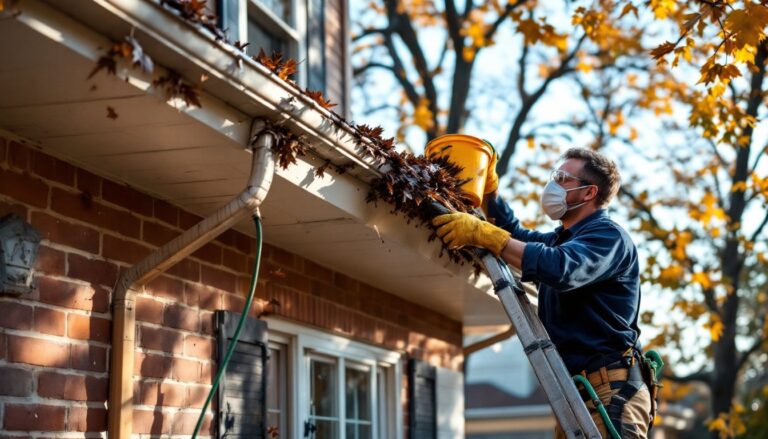
3. Don protective gear. Put on your gloves, goggles, and mask before climbing. Position your bucket on a rung at chest height using a bucket hook or rope.
Removing Debris And Flushing The System
1. Hand-scoop gutters starting at the downspout. Working from the downspout outward, use your leaf scoop to pull debris toward you. Push accumulated material into your bucket. Don’t try to clear the entire run in one pass: work in 3-4 foot sections, moving the ladder as you go. Gutters are typically 5-6 inches wide: this is a methodical, not rushed, task.
2. Clear downspout openings carefully. Most clogs start where the downspout connects to the gutter box. Debris backs up here first. Reach in and pull out packed leaves. If you encounter dense blockage, use your brass coil pusher or a plumbing snake to dislodge it. Some top-rated Tinley Park gutter cleaning professionals use pressure washers for stubborn downspout clogs: only do this if you’re confident your gutters are securely fastened (older gutters can pull free from the pressure).
3. Flush the entire system with a garden hose. Once hand-scooped, reposition your ladder in the middle of a long gutter run. Attach your spray nozzle and set it to a gentle stream (not a jet: high pressure damages the gutter seams). Starting at one end, flush water toward the downspout, watching for proper drainage. Water should flow smoothly down the gutter and disappear into the downspout without backing up or pooling. If you notice water not draining toward the downspout, your gutters may be sagging or improperly pitched. Sagging gutters (common in homes with inadequate hangers or undersized gutters) often require professional correction.
4. Test the downspout discharge. Once the gutter flushes cleanly, verify water comes out the downspout exit, usually 4-6 feet from the foundation. If water trickles or doesn’t flow, the downspout itself is blocked. Use your coil pusher or snake from the top, or feed it from the bottom cleanout (if present). A DIY guide from Bob Vila covers downspout unclogging in detail if you encounter resistance.
5. Repeat the process on all gutter sections. Most homes have multiple runs and two sides. Check gutters around the entire perimeter. Northeast and west-facing gutters often accumulate more debris due to sun and weather patterns.
When To Call A Professional In Tinley Park
Know your limits. Professional help is warranted in several scenarios. Gutters higher than 25 feet require extension ladders and significant balance: fall risk increases sharply. Two-story homes with pitch or uneven rooflines often exceed safe DIY reach. Sagging or separated gutters indicate structural failure, you need a professional to assess whether hangers are bent, rotted, or missing, and whether replacement or repair is the right move. Attempting to hand-scoop a structurally compromised gutter can cause it to pull away from the fascia.
Downspout blockages that won’t clear after snake attempts suggest problems deeper in the line: roots intrusion, crushed underground downspouts, or improper termination. Professionals have cameras and hydro-jetting equipment to diagnose and fix these issues. Guards, screens, or helmets are another reason to hire out. If your gutters have leaf guards installed, you may need equipment-specific training to clean without damaging the guards or pushing debris further into the gutter channel.
Cost expectations vary widely. HomeAdvisor estimates gutter cleaning runs $150–$300 per visit for a single-story home, up to $400–$600 for two-story structures, depending on gutter length and debris volume. Tinley Park professionals typically charge by the linear foot ($0.50–$1.50 per foot) or as a flat rate per job. If you’re spending more time second-guessing the ladder or struggling to breathe on a 20-foot ladder, the professional cost is insurance against injury. Gutter cleaning is one of the most common DIY incidents resulting in falls: it’s not shameful to delegate this one.
Conclusion
Gutter cleaning in Tinley Park is manageable for homeowners with proper equipment, safety discipline, and realistic self-assessment. The process requires just a few hours and basic tools, but it prevents costly water damage and extends your home’s life. Clean gutters twice yearly, use a stable ladder setup with standoff brackets, wear protective gear, and work methodically. If you’re uncomfortable at height, suspect structural issues, or face obstacles like guards or blocked downspouts, hire a professional, it’s a reasonable investment in your home’s integrity and your safety.