Table of Contents
ToggleYour gutters are probably the last thing on your mind until water starts pooling on your roof or foundation cracks appear. But this simple preventive task, gutter cleaning, keeps water flowing where it should and saves you thousands in potential repairs. If you’re an Orange County homeowner, seasonal gutter cleaning is especially critical due to the region’s dry summers followed by winter rains, which can leave debris-clogged gutters vulnerable to overflow damage. Whether you tackle it yourself or hire a pro, understanding your gutter system is the first step to protecting your home’s integrity.
Key Takeaways
- Regular gutter cleaning prevents costly water damage to your roof, foundation, and siding by ensuring water flows away from your home properly.
- Orange County homeowners should prioritize gutter cleaning twice yearly—after fall leaf drop and in spring—due to the region’s dry summers and concentrated winter rainfall.
- Clear warning signs like water overflow, sagging gutters, debris overflow, and staining on siding indicate your gutters need immediate attention.
- DIY gutter cleaning requires proper safety equipment including an extension ladder, work gloves, safety glasses, and dust masks, plus careful positioning and steady technique.
- Professional gutter cleaning in Orange County costs $150–$400 for single-story homes and $300–$600 for two-story homes, offering licensed expertise when ladder work is unsafe or gutters show damage.
- Hiring a professional gutter cleaner saves time and prevents injury, especially for multi-story homes, steep roofs, or complex gutter systems that exceed typical homeowner skill and safety levels.
Why Regular Gutter Maintenance Matters for Your Home
Gutters do one job: channel water away from your roof, walls, and foundation. When they work, you don’t think about them. When they fail, usually because they’re clogged with leaves, twigs, and dirt, water backs up, spills over the edge, and causes real damage.
Underwater pooling on your roof can lead to rot in fascia boards and soffit, plus ice dam formation in cooler months. Overflowing gutters dump water against your foundation, causing settling, cracks, and interior moisture problems that are exponentially more expensive to fix than a $200 cleaning. Landscape beds and siding also suffer accelerated deterioration when gutters aren’t doing their job.
Orange County’s weather pattern, minimal rain in summer, concentrated rainfall in winter, means gutters can sit neglected for months before heavy rains expose the problem. A single gutter cleaning session, done twice yearly (fall after leaf drop and spring to clear winter debris), typically costs far less than foundation repair or mold remediation.
Signs Your Gutters Need Cleaning
Don’t wait for water damage to act. Watch for these warning signs:
• Visible debris, leaves, twigs, and dirt piled in the gutters or cascading over the edge
• Water overflow during rain, especially near downspouts
• Sagging gutters, sections that dip or pull away from the fascia (often from the weight of retained water and sediment)
• Granules in downspouts, shingle material washing into gutters signals advanced wear on your roof
• Standing water after rain stops, visible in gutters or along the foundation
• Staining on siding, dark streaks indicate water is overflowing instead of draining properly
• Pest activity, gutters clogged with organic matter attract mosquitoes, birds, and rodents
If you see any of these, it’s time to act. A quick visual inspection from the ground with binoculars or a short ladder look saves guesswork. If you’re unsure whether your gutters need attention, hiring a professional inspector costs $100–$300 and provides a clear maintenance plan backed by an expert’s assessment.
DIY Gutter Cleaning: Step-by-Step Instructions
Essential Tools and Safety Equipment
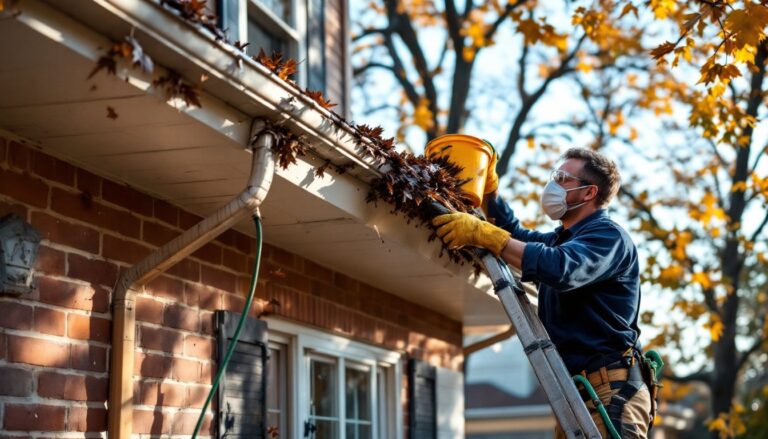
Before you climb a ladder, gather the right gear. Most gutter cleaning jobs require only basic tools, but skipping safety equipment invites injury.
Tools:
• Extension ladder (20–24 feet for single-story homes: longer for multi-story)
• Gutter scoop or small shovel (plastic or metal, 2–3 inches wide)
• 5-gallon bucket for debris
• Hose with spray nozzle or gutter cleaning wand attachment
• Work gloves (nitrile or leather, not cotton)
• Safety glasses or goggles, debris flies
• Dust mask or respirator, decomposed leaves kick up mold spores and allergens
• Pressure washer (optional, but efficient for final rinse)
Safety Essentials:
• Always wear non-slip shoes with good tread.
• Have someone spot you at the base of the ladder or use a ladder stabilizer.
• Never overreach from the ladder: move it frequently instead.
• Avoid cleaning gutters on wet, windy, or stormy days.
• Do not lean back: keep your hips within the ladder rails at all times.
The Cleaning Process
Step 1: Position the Ladder Safely
Place your extension ladder against the fascia board at a 75-degree angle (about 1 foot of distance from the base for every 4 feet of height). Make sure all feet are on level ground. If your ground is uneven, use a ladder stabilizer or shim one foot with a board. Never stand on the top rung.
Step 2: Remove Large Debris by Hand
Starting at a downspout, scoop out accumulated leaves, twigs, and dirt into your bucket. Work toward the other end of the section, pushing debris toward the downspout opening. This keeps water flowing and prevents damming during the next stage. Work methodically: don’t rush or reach too far.
Step 3: Flush the Gutter and Downspout
Once the large debris is removed, use your hose with a spray nozzle to flush the gutter channel, working toward the downspout. For stubborn sediment, use a gutter cleaning wand attachment or pressure washer at a low setting (avoid high pressure, which can damage gutters or dislodge fasteners). Direct water down the downspout to confirm it flows freely. If water backs up, your downspout is clogged: use a plumbing snake or call a professional to clear it.
Step 4: Inspect for Damage
Once the gutter is clean and wet, look for rust holes, separation at seams, or sections pulling away from the fascia. Minor gaps (under 1/8 inch) can be sealed with gutter sealant: larger issues warrant repair or replacement. Sagging sections suggest fastener failure or hidden debris: tighten bolts or add new fasteners as needed.
Step 5: Move and Repeat
Reposition your ladder safely and repeat Steps 1–4 for each section of gutter around your home. Don’t underestimate the time required: a typical single-story home takes 2–4 hours.
When to Hire Professional Gutter Cleaners in Orange County
Not every homeowner should climb a ladder, and that’s okay. Hire a professional if:
• Your home is more than two stories tall, fall risk increases exponentially on longer ladders
• Your roof is steep or slippery, asphalt shingles and tile become hazardous when wet or algae-covered
• You have a disability, age, or health condition that makes ladder work unsafe
• You have large gutters, complex roof lines, or multiple downspouts, more time and complexity justify professional expertise
• Your gutters show signs of damage, a pro can identify whether repair or replacement is needed
Professional gutter cleaning in Orange County typically costs $150–$400 for a single-story home and $300–$600 for two-story homes, depending on debris volume and gutter length. Services usually include hand-removal of debris, flushing, downspout clearing, and a brief inspection. Some companies offer maintenance plans (quarterly or biannual cleaning) at discounted rates, which spreads costs over the year.
When shopping for a pro, verify they’re licensed and insured. Check references and recent reviews on platforms like top-rated gutter cleaning pros in Orange County, which list vetted contractors with customer ratings. Ask if they inspect downspouts, check for gutter damage, and photograph their work. Avoid unlicensed crews offering suspiciously low prices: gutter damage or injury liability can cost far more than a professional’s fee.
Cost estimators like HomeAdvisor can provide ballpark figures for your region and help you request quotes from multiple providers, ensuring you’re not overpaying.
Conclusion
Gutter cleaning isn’t glamorous, but it’s one of the most cost-effective maintenance tasks a homeowner can tackle, or delegate. Whether you DIY or hire a pro, commit to twice-yearly cleaning and inspect your gutters after heavy storms. Resources like ImproveNet offer guides to help plan your maintenance calendar. A little attention now prevents water damage, foundation issues, and thousand-dollar repairs later. Your home will thank you.