Table of Contents
ToggleA clogged drain in your Thornton home doesn’t always require an emergency call to a plumber. Whether it’s a slow bathroom sink, a backed-up shower, or a kitchen drain that won’t budge, many drain clogs respond to straightforward DIY methods. In this guide, we’ll walk through practical drain cleaning techniques you can tackle yourself, explain what warning signs mean it’s time to hire a professional, and share prevention strategies that keep water flowing freely year-round. Colorado’s mineral-rich water and older home infrastructure mean Thornton homeowners face specific drainage challenges, understanding both when to go hands-on and when to step back can save you time, money, and headaches.
Key Takeaways
- Most drain clogs in Thornton can be cleared with DIY methods like plungers or baking soda and vinegar before calling a professional.
- Thornton’s hard water and older home infrastructure create specific drainage challenges, including mineral deposits and corroded pipes that require targeted prevention strategies.
- Call a professional drain cleaning service immediately if your drain clog returns quickly, multiple drains are slow simultaneously, or tree roots are suspected—these indicate serious main-line issues.
- Prevent future clogs by installing drain screens, avoiding grease disposal in sinks, running hot water after use, and scheduling preventive cleanings every 2–3 years for homes over 30 years old.
- Septic systems require professional, chemical-free drain cleaning services; check local building codes before attempting DIY drain work on your sewer line.
Common Drain Problems in Thornton Homes
Thornton’s climate and local water conditions create a particular mix of drain challenges. Hard water, water with high mineral content, accumulates calcium and magnesium deposits inside pipes over time, narrowing the interior and trapping debris. Older homes in the area often have cast-iron or galvanized pipes that corrode from the inside out, creating rough surfaces where hair, soap buildup, and grease cling.
The three most common culprits behind Thornton drain clogs are hair-and-soap accumulation in bathroom drains, grease buildup in kitchen sinks, and mineral scale in water lines serving older properties. Basement floor drains and laundry drains frequently clog when lint and sediment settle. You’ll notice slow drainage (water takes 10+ seconds to empty), gurgling sounds as air tries to escape past the blockage, or water backing up into adjacent fixtures, all signs that something’s obstructing the line.
DIY Drain Cleaning Techniques That Work
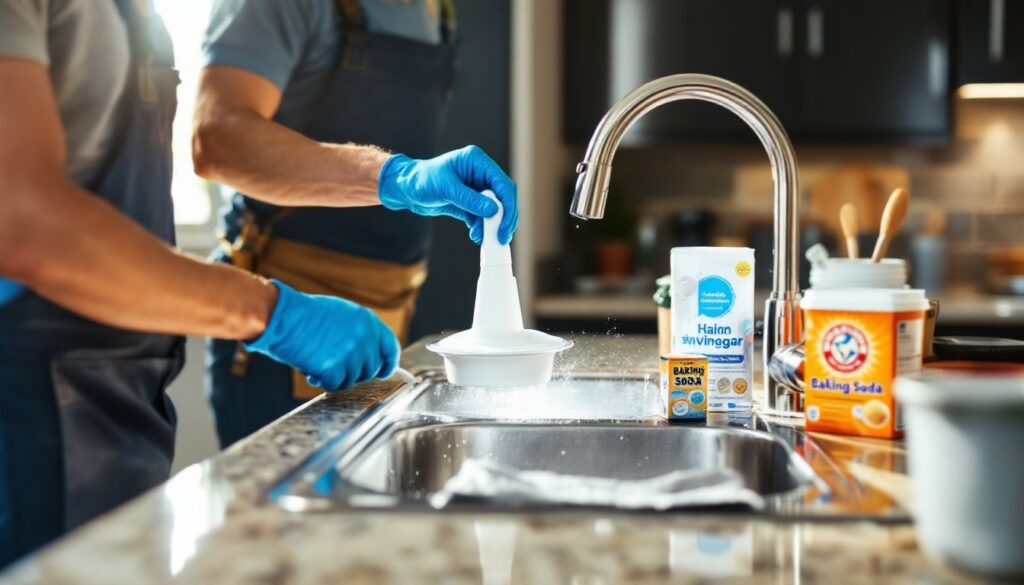
Before calling a pro, try these proven methods. Gather a plunger (cup-style for sinks, flange-style for toilets), baking soda, white vinegar, a wire drain snake or plumbing auger, bucket, gloves, and safety goggles. Wear gloves to avoid contact with bacteria and debris lurking in drain lines.
The Plunger Method
A quality plunger remains your first line of defense for shallow clogs. For a bathroom sink or shower, fill the basin with enough water to cover the plunger cup, at least 3 to 4 inches. Block any overflow hole with a wet cloth so the plunger’s suction stays concentrated. Plunge vigorously for 15 to 20 seconds, maintaining a tight seal. Release and check if water drains: repeat if needed.
For a double-bowl kitchen sink, block the drain you’re not plunging with a wet cloth, then fill the working bowl with water and plunge. The dual-drain setup requires back pressure from the blocked side to dislodge clogs effectively. If the clog persists after five or six plunging sessions, move to the next technique.
Baking Soda and Vinegar Solutions
This chemical-free method works on organic buildup, soap scum, hair, and soft grease. Remove standing water from the drain. Pour ½ cup of baking soda down the drain, then follow with 1 cup of white vinegar. The reaction creates fizzing action that breaks apart debris. Cover the drain opening with a stopper or damp cloth to force the reaction downward through the pipe. Let it sit for 30 minutes to an hour, then flush with boiling water (unless your pipes are plastic: hot but not boiling water works for PVC).
For stubborn kitchen grease clogs, boil a kettle of water, pour it down the drain while the baking soda-vinegar mixture is still working, and repeat the flush two or three times. This technique removes light to moderate clogs but won’t clear dense, compacted blockages. If water still drains sluggishly after two applications, the clog likely needs mechanical removal.
When to Hire Professional Drain Cleaning Services
Stop here and call a professional if your drain clog returns within days, if multiple drains are slow simultaneously (a sign of a main line blockage), or if you hear frequent gurgling from drains throughout your home. These patterns indicate a problem deeper in your home’s drainage system that requires equipment you won’t have in your garage.
Severe clogs caused by tree root intrusion, common in older Thornton neighborhoods, demand professional attention immediately. Roots crack and infiltrate clay or cast-iron sewer lines, causing backup and potential foundation damage. A professional plumber uses a sewer camera to inspect the line, identify the blockage location and type, then removes it with a motorized auger, hydro-jetting, or (if roots have damaged the pipe) scheduled replacement.
Building codes also govern certain repairs. If your home has a septic system (less common in Thornton proper but present in outlying areas), you cannot use store-bought chemical drain cleaners, they kill beneficial bacteria essential for system function. A septic-safe professional service is required. Similarly, some municipalities require permits for drain cleaning if the work involves the main sewer line.
Budgeting for professional service varies widely. According to HomeAdvisor, basic drain cleaning runs $150–$300, while sewer line inspection and clearing can reach $1,000+ depending on blockage severity and line accessibility. Top-rated drain cleaners in Thornton offer upfront estimates: get two quotes before committing.
Preventing Future Drain Clogs in Your Home
An ounce of prevention beats a pound of plunging. In bathrooms, install drain screens or stoppers, they catch hair before it enters the pipe and cost $2–$8 per unit. Clean screens weekly by removing accumulated hair and rinsing. Never pour grease or cooking oils down the kitchen sink: instead, let them cool, wipe into a container, and dispose in the trash. Even “drain-safe” oils solidify inside cold pipes and trap other debris.
Run hot water through your kitchen sink for 30 seconds after each use to flush grease and soap residue before they solidify. Once monthly, pour boiling water (or very hot water for plastic pipes) down each drain to melt buildup before it accumulates. In Colorado’s hard-water areas, consider a water softener, it reduces mineral scale in pipes and appliances, extending their lifespan and improving drainage. Installation and ongoing salt costs run $800–$2,500 for a whole-home system, but savings on maintenance and appliance longevity often justify the investment over five to ten years.
For laundry areas, use a lint trap on your washing machine drain hose (a $15–$30 addition that catches fibers before they enter the main line) and schedule professional drain cleaning every two to three years if your home is over 30 years old, preventive cleaning removes scale and minor debris that might otherwise grow into major blockages. Resources like ImproveNet can help you find local specialists and compare maintenance plans.
Conclusion
Most Thornton drain clogs clear with a plunger or baking soda-and-vinegar flush, saving you a service call. Know your limits, if the clog is persistent, multiple drains are affected, or you suspect main-line damage, contact a professional immediately. Invest in screens, skip grease disposal down the drain, and flush regularly to keep clogs rare. When in doubt about code requirements or septic system safety, ask before you pour.