Table of Contents
ToggleLiving in Naples means dealing with intense sun, tropical storms, and year-round moisture, all of which wreak havoc on your gutters. Whether you’re cleaning leaves from fall or dealing with the debris that collects after a summer downpour, gutter maintenance is non-negotiable if you want to protect your home’s foundation, siding, and roof. This guide walks you through why gutter cleaning matters in Florida’s climate, when to tackle the job yourself, and when it’s time to call in the pros. We’ll cover the tools, steps, and safety measures you need to keep your gutters working as they should.
Key Takeaways
- Regular gutter cleaning in Naples is essential to prevent water damage, mold, foundation cracks, and sagging gutters caused by Florida’s intense rain and humidity.
- Plan gutter cleaning 2–4 times per year in Naples—primarily in late April or early May and November, plus after storms and high winds during hurricane season.
- DIY gutter cleaning requires proper safety equipment (ladder, gloves, glasses, mask), a gutter scoop, bucket, and garden hose; avoid pressure washers and always work on clear, dry days.
- Hire professional gutter cleaning services for two-story or taller homes, heavy tree cover, mobility issues, or when damage is visible—expect $150–$500 depending on home size.
- Install gutter guards and trim overhanging branches within 6 feet of the roofline to reduce debris buildup, and ensure downspouts drain at least 4–6 feet from your foundation.
Why Regular Gutter Cleaning Matters in Naples
Gutters do one job: channel water away from your roof, walls, and foundation. When they’re clogged with leaves, pine needles, dirt, and debris, water backs up and spills over the edges. In Naples, where humidity is high and rain comes fast, standing water becomes a breeding ground for mold and mildew. That overflow can rot your fascia boards, damage your siding, and create foundation cracks that cost thousands to repair.
Beyond water damage, clogged gutters add weight. Wet debris compresses and sits, sometimes weighing 50+ pounds per gutter section. This strains the fasteners holding gutters to your home and can cause them to sag or pull away from the roofline. The combination of excess weight and water movement makes your gutter system work twice as hard. Worse, stagnant water attracts mosquitoes, a real problem in South Florida. Regular cleaning (typically 2–4 times per year, depending on tree coverage) prevents these issues before they start.
Best Times to Clean Your Gutters in Florida’s Climate
In Naples, the traditional spring-and-fall cleaning schedule doesn’t tell the whole story. Hurricane season (June–November) can dump heavy debris, and the post-hurricane cleanup might be your most important gutter task of the year. Plan your first cleaning for late April or early May, before the summer rain pattern kicks in. This gives you a clean system heading into the season.
Your second major cleaning should happen in late fall or early winter, around November. This catches leaves and organic matter that’s blown in during summer and fall. If you have lots of trees on your property, add a third cleaning in early August, before late-summer storms. After any significant storm or high winds, take a quick look at your gutters, you may need a mid-schedule cleanup.
Avoid cleaning right after a heavy rain: the debris is heavier and harder to remove. Pick a clear, dry day when the sun has had a few hours to dry out the gutter bottom. Safety matters more than timing, so never clean gutters in wind or when lightning threatens.
DIY Gutter Cleaning: Tools and Steps
Essential Tools You’ll Need
Before you climb a ladder, gather these items:
• Ladder (20-foot extension ladder for most single-story homes: adjust for two-story)
• Work gloves (thick leather or nitrile: gutters have sharp edges and nails)
• Safety glasses (flying debris is no joke)
• Dust mask or respirator (decomposing leaves and mold spores in standing water are nasty)
• Gutter scoop (plastic or metal curved tool designed to match gutter profile)
• 5-gallon bucket (toss debris into it rather than on the ground)
• Garden hose with spray nozzle (to flush remaining debris)
• Handheld small shovel or spoon (for tight corners)
Optional but helpful: a ladder stabilizer to prevent the ladder from slipping sideways, and a gutter vacuum if you have heavy buildup. Some people use a Shop-Vac with a gutter attachment to avoid hand-scooping altogether.
Step-by-Step Cleaning Process
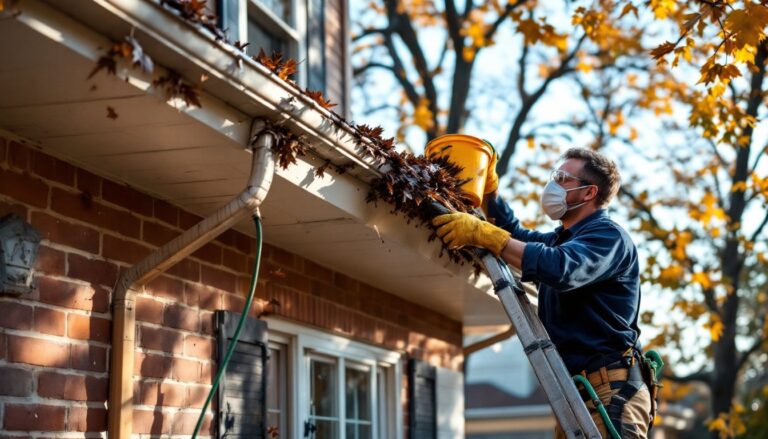
1. Set up safely. Position your ladder on level ground, away from power lines. Have a helper hold it steady if possible. Wear all PPE: gloves, glasses, and a mask. Never overreach: move the ladder frequently instead.
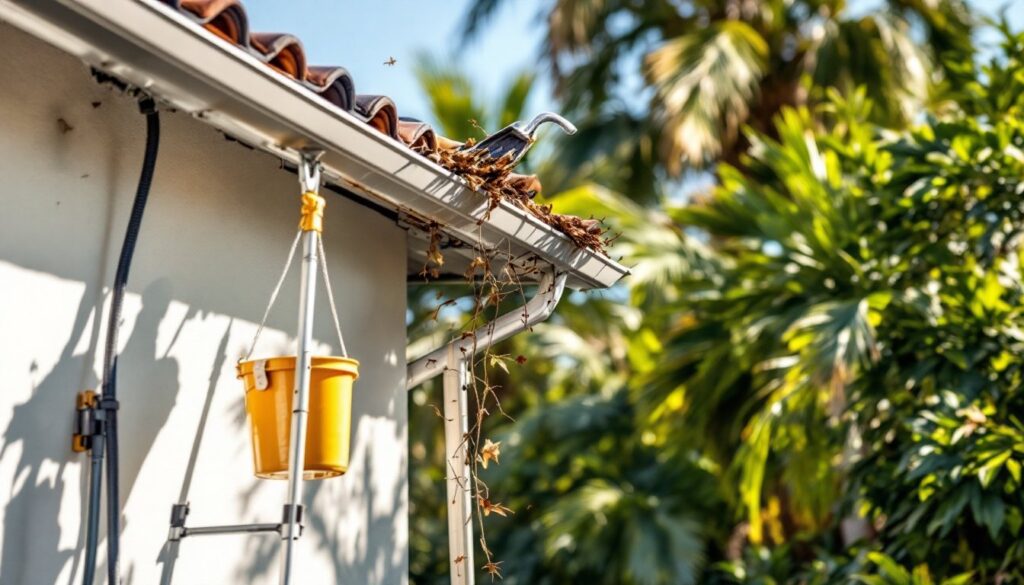
2. Scoop out large debris. Starting at one end, use your gutter scoop to pull out leaves, twigs, and packed sediment. Dump everything into your 5-gallon bucket. Work along the entire length, moving the ladder as needed. This is the bulk of the work and takes 30–60 minutes depending on gutter length and debris load.
3. Flush with water. Once the bulk debris is out, use your garden hose to flush the gutters. Start at the end opposite the downspout and work toward it. This dislodges fine silt and confirms water is flowing. Watch the downspout: water should flow freely. If it backs up, the downspout is clogged, see below.
4. Clear downspouts. If water doesn’t flow from the downspout outlet, insert the hose into the top of the downspout and run water at medium pressure. Sometimes a solid blockage needs to be broken up: a plumbing snake works well for this. Never use pressure washers on gutters, they damage the seams and fasteners.
5. Check for damage. Once clean and dry, look for standing water, sagging sections, or loose fasteners. Mark problem areas for repair or professional assessment.
When to Hire Professional Gutter Cleaners
Some situations call for professionals. If your home is three stories tall, ice damming is possible (rare in Naples, but gutters at height present real danger), or you have mobility or health issues, hire a pro. Two-story homes are manageable for confident DIYers with good ladder skills, but don’t push yourself.
You should also consider professionals if you have heavy tree cover. Thick debris, gutter systems with unusual angles, or gutters that haven’t been cleaned in years take time and muscle. Also, if you notice gutter damage, sagging, separated seams, rust, or holes, a cleaner can spot problems that lead to repairs. Many gutter cleaning services also offer gutter guards (mesh or foam inserts) that reduce future buildup.
Price varies by home size, accessibility, and local competition. According to contractor networks like HomeAdvisor, professional gutter cleaning in Southwest Florida typically runs $150–$300 for a single-story home and $300–$500 for two-story, though prices shift with market demand. Get quotes from at least two services and verify they carry liability insurance. Some companies bundle cleaning with minor repairs, which can be worth it if your gutters need fastener tightening or caulk work.
Preventing Future Gutter Problems
Gutter guards aren’t magic, but they reduce labor and debris buildup significantly. Mesh guards allow water through while blocking leaves: foam inserts fill the gutter and let water percolate down while keeping debris out. Both require an initial investment ($1,000–$3,000 for a typical home) but pay for themselves in time saved and reduced damage over 10+ years.
Second, trim tree branches that overhang your roof. Branches within 6 feet of your roofline drop leaves and twigs directly into gutters. A professional arborist or your neighbor’s chainsaw can handle this, and it’s well worth the effort. After storms, always do a visual check from the ground using binoculars, don’t climb up unless you see an obvious blockage.
Third, ensure your downspouts drain at least 4–6 feet away from the foundation. Water cascading at your foundation encourages cracks and seepage. If a downspout empties too close, add an extension or splash block. Finally, check gutter slope annually. Gutters should pitch slightly toward downspouts (about 1/4 inch per 10 feet). If you see pooling water after rain, it’s time to have sagging gutters re-hung or adjusted. Services like Angi can connect you with local gutter specialists for maintenance or gutter replacement if needed.