Table of Contents
ToggleGutters aren’t glamorous, but they’re essential, and dirty gutters can cost you thousands in foundation, roof, and siding damage. Middletown homeowners face particular challenges from seasonal debris, leaves, and moisture that accumulate year-round. Whether you’re planning a DIY cleanup or hiring a pro, understanding what needs doing and when makes the difference between a preventive fix and an expensive repair. This guide covers everything you need to know about gutter cleaning in Middletown: when it’s necessary, how to do it safely yourself, and when professionals are worth the call.
Key Takeaways
- Gutter cleaning in Middletown prevents costly water damage to foundations, roofs, and siding—ignoring maintenance can result in thousands of dollars in repairs.
- Fall and spring are critical seasons for gutter cleaning in Middletown; schedule cleanings in early October and late November, then check again in late April to catch winter damage.
- DIY gutter cleaning requires proper safety equipment (ladder, gloves, safety glasses, scoop, and hose) and typically takes 2–4 hours for a single-story home, but hire professionals for multi-story homes, extensive damage, or if you’re uncomfortable on ladders.
- Watch for warning signs like water spilling over edges, sagging gutters, visible debris piles, dark stains, pest activity, and foundation cracks—these indicate your gutters need immediate attention.
- Professional gutter cleaning services in Middletown cost $150–$400 for single-story homes; gutter guards ($10–15 per linear foot) and regular maintenance are preventive investments that save thousands long-term.
- After flushing gutters with water, inspect downspouts and check for proper slope (gutters should drop 1 inch per 40 feet toward the downspout) to ensure drainage and prevent pooling.
Why Gutter Cleaning Matters for Middletown Homeowners
Gutters direct water away from your roof, walls, and foundation. When they’re clogged with leaves, twigs, and sediment, water pools and overflows, seeping into fascia boards, soffits, and the foundation itself. In Middletown, where seasonal moisture is significant, this isn’t a minor inconvenience, it’s the start of rot, mold, and structural damage that spreads fast.
Clean gutters also prevent ice dams in winter (a real problem in the Northeast) and reduce pest habitats where standing water attracts mosquitoes and other insects. A functional gutter system extends roof life, protects landscaping from erosion, and saves you from costly foundation repairs. Regular cleaning costs hours of work or a few hundred dollars: ignoring it costs tens of thousands. For Middletown homes especially, where freeze-thaw cycles and humid summers accelerate decay, gutter maintenance is non-negotiable maintenance, not optional upkeep.
Signs Your Gutters Need Cleaning
Don’t wait for visible disaster. Watch for these warning signs:
- Water spilling over edges during rain means gutters are full and can’t drain.
- Sagging or pulling away from the fascia indicates water weight and deteriorating fasteners.
- Visible debris piles on the roof edge, in valleys, or piled against downspouts.
- Dark stains or mold on fascia or siding below the gutter line signal water overflow.
- Pest activity, mosquitoes, ants, or birds nesting in gutters, happens when standing water or organic debris provides habitat.
- Basement moisture or foundation cracks appearing after heavy rain can trace back to failed drainage.
In Middletown, fall cleanup is especially critical after trees drop leaves. Even if you cleaned in early fall, November through early December usually demands a second pass. Spring (late April to May) also warrants a checkup after winter ice melt and pollen season. Mark your calendar: if you skip two seasons, you’re setting up for damage.
DIY Gutter Cleaning: Tools and Techniques
Essential Tools You’ll Need
Before climbing a ladder, gather the right gear. You’ll need:
- Sturdy ladder (20–28 feet for most single-story homes: rent or borrow a quality one, don’t skimp here).
- Work gloves (leather or reinforced rubber: gutter crud is sharp and dirty).
- Safety glasses or goggles (debris flies when you scoop).
- Scoop or gutter cleaner (a stainless steel gutter scoop works better than a garden trowel and costs $15–25).
- Bucket (5-gallon, with a clip that attaches to the ladder rung).
- Hose with spray nozzle (to flush debris and check flow).
- Leaf blower (optional but speeds up dry debris removal before wet cleaning).
- Extension poles (if you’re uncomfortable at height: they let you work from lower on the ladder).
Consider renting a gutter vacuum or power washer if you have a lot of debris or multiple stories. Both cost $30–60 per day and save time and ladder exposure.
Step-by-Step Cleaning Process
-
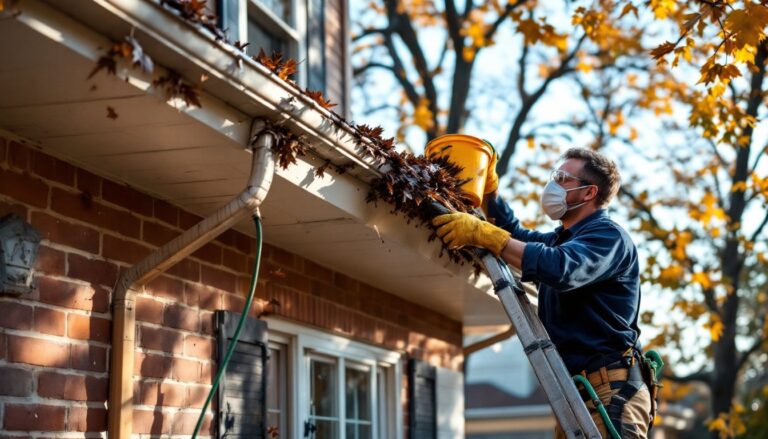
Set up safely. Place the ladder on level ground, away from power lines. Have someone hold it or use a ladder stabilizer (a metal brace that prevents lateral shifting). Wear closed-toe boots with good grip.
-
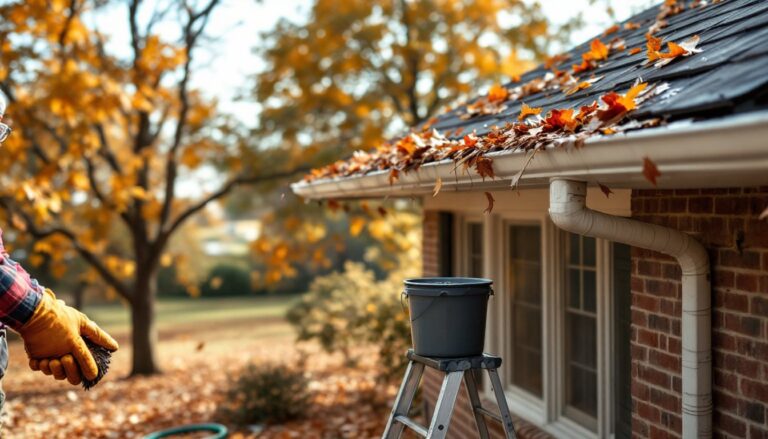
Remove bulk debris. Starting at a downspout end, scoop leaves and twigs into your bucket. Work toward the opposite end so debris flows toward the downspout. Don’t rush this step: thorough scooping prevents clogs further down.
-
Check and clear downspouts. The elbow joint at the base of downspouts clogs easily. Disconnect it, clear it by hand or with a plumbing snake, and reattach. Run water through to ensure flow.
-
Flush with water. Once gutters are clear, use your hose to flush toward the downspout. Watch for pooling: if water sits anywhere, you likely have a slope problem (gutters should drop 1 inch per 40 feet toward the downspout). Mark these spots, you may need to address the gutter pitch or have a professional adjust hangers.
-
Inspect and repair. Look for rust holes, cracks, or loose fasteners. Small holes (smaller than a quarter) can be sealed with a silicone-based gutter sealant ($10–15 per tube). Separated seams at corners need new caulk. If damage is extensive, plan for gutter replacement, it’s beyond DIY scope for most.
-
Clean up. Dispose of debris properly (compost leaves, toss twigs in yard waste). Rinse your tools and secure the ladder. Don’t leave wet leaves in the gutters or on the roof, they rot and trap moisture.
Time estimate: 2–4 hours for an average single-story home, depending on debris volume and height accessibility. Wear long sleeves and a mask if you have mold concerns.
When to Call a Professional in Middletown
DIY works if you’re comfortable on a ladder, physically able, and dealing with straightforward debris. But call a pro if:
- You have a two-story home or steep roof. Height and pitch create serious fall risk: pros have harnesses and experience.
- Gutters are severely sagging, pulling loose, or have extensive rust. Repairs might mean gutter replacement, skilled work requiring proper fastening and pitch.
- You spot standing water after flushing or suspect hidden clogs (often in underground drain lines). Professionals use cameras and specialized equipment.
- You’re uncomfortable on ladders or have mobility issues. It’s not worth injury.
- Gutters weren’t cleaned last year or longer. Heavy, compacted buildup is harder to remove safely and may hide damage.
Middletown has several reputable gutter cleaning companies. Top-rated gutter cleaning professionals in Middletown, NJ include firms with solid reviews, insured crews, and warranties on work. Get quotes from at least three: prices typically range from $150–$400 for a single-story home, depending on gutter length and debris volume. Ask about warranties on sealant and whether they inspect for damage. Professionals often spot small problems before they escalate.
Seasonal Gutter Maintenance Tips
Fall (September–November): This is the heavy season. Clean gutters in early October, then again in late November or early December after leaves fully drop. Install gutter guards or leaf guards if you haven’t already, they reduce debris volume and extend the time between cleanings (though they don’t eliminate the need for regular checks). Expect to pay $10–15 per linear foot for basic mesh guards: they’re worthwhile in wooded areas.
Winter (December–February): Even with clean gutters, ice dams can form when snow melts and refreezes at the eave. Make sure gutters and downspouts are clear before freeze season. Remove snow and ice dams carefully, don’t use a pickax, which damages gutters. A heat cable (electric trace wire) can prevent dams, though it adds cost and complexity.
Spring (March–May): After winter, check for damage from ice, falling branches, or shifted hangers. Clear any debris left from spring pollen and budding trees. This is when you’ll spot problems caused by winter freeze-thaw cycles.
Summer (June–August): Light maintenance period. A quick visual inspection every 4–6 weeks catches any issues early. In heavy thunderstorm season, check gutters after severe weather, branches and debris often fall after wind events.
Reference Home maintenance checklists and seasonal repair guides to align gutter cleaning with broader home upkeep. You’ll stay ahead of emergencies if gutters are part of a planned maintenance routine rather than a reactive chore.