Table of Contents
ToggleAnnapolis homeowners face a unique climate challenge: Maryland’s humid summers, wet springs, and leaf-heavy falls all conspire to clog gutters fast. Left untouched, blocked gutters lead to water backing up under roof shingles, rotting fascia boards, cracked foundations, and flooded basements, damage that costs thousands to repair. Regular gutter cleaning isn’t glamorous, but it’s one of the most cost-effective ways to protect your home’s structure and curb appeal. This guide walks you through why it matters, how to spot problems, when to DIY, and when to call in professionals in the Annapolis area.
Key Takeaways
- Regular gutter cleaning in Annapolis prevents thousands in water damage by channeling rainwater safely away from your roof, walls, and foundation—costing only $100–$300 annually versus $10,000+ in foundation repairs.
- Watch for warning signs like overflowing debris, sagging gutters, water stains on exterior walls, and rust spots; addressing these within a week prevents costly structural damage.
- DIY gutter cleaning requires proper safety equipment including a stable ladder, gloves, safety glasses, and a spotter, with the process involving debris removal by hand, flushing, downspout clearing, and visual inspection for damage.
- Hire professional gutter cleaners if your home is three stories high, gutters haven’t been cleaned in years, you spot rust or large holes, or you’re uncomfortable working at heights—expect to pay $150–$400 per visit in Annapolis.
- Follow a seasonal maintenance schedule (spring, summer, fall, winter) and consider investing in gutter guards or screens ($4–$10 per linear foot) to reduce debris accumulation by 70–80% and save time long-term.
Why Regular Gutter Cleaning Matters In Annapolis
Gutters do one job: channel rainwater away from your roof, walls, and foundation. When they’re clogged with leaves, twigs, shingle grit, and sediment, that water has nowhere to go. It pools on the roof, seeps under flashing, and runs down the exterior walls instead of safely to the ground.
In Annapolis, the problem is especially acute. You’re surrounded by mature oaks and maples that shed heavily each fall. Spring brings pollen and additional debris. Summer thunderstorms dump water faster than clogged gutters can handle it. Even a single season of neglect can cause:
- Water damage to soffits, fascia, and roof decking (repair costs: $500–$3,000)
- Foundation cracks and basement flooding (foundation repair: $10,000+)
- Mold and rot in walls and attics
- Landscape erosion around the foundation
Clean gutters protect your investment. Most homeowners spend $100–$300 annually on cleaning (DIY or professional) versus thousands on water damage repairs. It’s preventive medicine for your home.
Signs Your Gutters Need Immediate Attention
You don’t need to wait for spring or fall. Watch for these red flags year-round:
- Visible debris overflowing from gutters – leaves, twigs, or sediment spilling over the edges
- Sagging gutters – sections hanging lower than others, indicating weight from standing water and debris
- Water stains on exterior walls – dark streaks below gutters mean water is running over the sides instead of through downspouts
- Pooling water near the foundation – water should flow away, not puddle against your home
- Rust spots or holes in metal gutters – corrosion weakens the structure and causes leaks
- Pest activity or bird nests – animals love clogged gutters as breeding grounds
- Gutter pulls away from fascia – brackets are failing under debris weight: gutters won’t drain properly
If you spot any of these, plan a cleaning within the week. Don’t let a small problem become expensive damage.
DIY Gutter Cleaning: Step-By-Step Instructions
Safety First: Essential Tools And Precautions
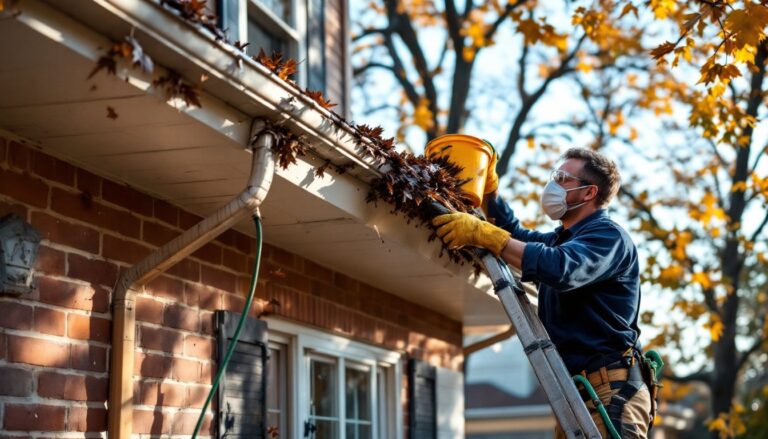
Gutter cleaning happens at height. Falls are the leading cause of home injury. Take safety seriously.
Required tools:
- Stable ladder (aluminum extension ladder, 20–28 feet for most two-story homes)
- Work gloves (leather or rubber: gutters harbor bacteria and sharp debris)
- Safety glasses or goggles (debris falls: protect your eyes)
- Bucket or bag for debris (hang from a ladder hook or place on the roof)
- Gutter scoop (a curved tool designed to fit inside gutters) or stiff putty knife
- Hose with spray nozzle (for final flush)
- Ladder stabilizer or standoff (prevents the ladder from slipping)
Before you start:
- Wear long sleeves and pants
- Have someone spot you from below: never work alone at height
- Avoid cleaning in wet conditions or high winds
- Check that the ladder is on level, firm ground
- Don’t overreach: reposition the ladder frequently
The Cleaning Process And Inspection Tips
Step 1: Position your ladder safely. Place it directly beneath a gutter section, angled slightly away from the house (a ratio of 1 foot out for every 4 feet up). Use a ladder stabilizer to prevent lateral movement.
Step 2: Remove large debris by hand. Starting at the downspout, scoop out leaves, twigs, and sediment. Work toward the other end of the section, placing debris in your bucket. Don’t rush: thorough hand removal is faster than hosing out a clogged mess.
Step 3: Flush the gutter and downspout. Once large debris is gone, use a hose to spray water along the gutter toward the downspout. Watch where water exits the downspout’s base. If it’s not flowing freely, the downspout is likely clogged, you’ll need to clear it (see below). Repeat for each section.
Step 4: Clear downspout blockages. If water backs up, the downspout is blocked. Disconnect the downspout from the elbow (usually held by a band or screws), hold it vertically, and feed a plumbing snake or garden hose up from the bottom to dislodge the clog. Alternatively, remove the elbow and clean it separately. Reattach once clear.
Step 5: Inspect while you clean. Look for:
- Rust holes or corrosion (metal gutters)
- Cracks or splits in the gutter body
- Bent or misaligned sections (water won’t flow correctly)
- Loose fasteners or hangers (gutters should be snug against the fascia)
- Deteriorated sealant at joints
Small holes can be patched with a gutter repair kit (epoxy or silicone patches, $10–$30). Serious damage (extensive rust, large splits) typically requires section replacement.
Step 6: Check the slope. Water should flow toward downspouts, not pool in the middle. You can’t see slope with the naked eye, but if water sits in any spot after flushing, the gutter has settled. Note it for professional assessment or gutter realignment.
When To Hire Professional Gutter Cleaners In Annapolis
DIY cleaning works fine for routine maintenance, but some situations call for professionals. You should hire a gutter cleaner if:
- You’re uncomfortable working at height – no shame: falls happen. Professionals have the insurance, equipment, and experience.
- Your home is three stories or higher – ladder safety gets much trickier above 30 feet.
- Gutters are heavily clogged or haven’t been cleaned in years – buildup can weigh 200+ pounds per section: you risk injury and gutter damage.
- You spot rust, large holes, or sagging gutters – professionals can assess whether repair or replacement is needed and install correctly.
- Downspouts are repeatedly clogged – pros have commercial-grade equipment to clear stubborn blockages and can recommend solutions like gutter guards.
- You want gutter guards or screens installed – a professional ensures proper fit and doesn’t void manufacturer warranties.
In Annapolis, professional gutter cleaning typically costs $150–$400 for a one-story home, depending on gutter length and debris load. You can get quotes from top-rated gutter professionals in Annapolis and compare rates and customer reviews. Many pros offer seasonal packages (spring and fall) that cost less than individual visits and ensure consistent maintenance.
Seasonal Maintenance Schedule For Year-Round Protection
A simple schedule keeps gutters in top shape and prevents surprises:
Spring (March–April): Clean after trees leaf out but before heavy rain season. Remove winter debris, inspect for damage from ice dams, and check downspout flow.
Summer (June–July): Quick visual inspection. If you’ve had heavy storms, check for overflowing water or debris accumulation. This is also the best time to repair holes or install gutter guards before fall leaf drop.
Fall (September–October): Clean mid-fall when most leaves have dropped but before the final leaf flush. Clean again in late November after the last heavy drop. Fall is the season when clogs cause the most problems.
Winter (December–February): In Annapolis, winters are mild enough that significant freezing is rare, but monitor for ice dams on south-facing roof sections. If gutters are clogged under ice, water can back up under shingles.
Pro tip: If you have large trees overhanging your roof, you may need cleaning every 4–6 weeks during fall. Homeowners using a maintenance checklist report fewer emergency repairs. Consider setting phone reminders for each season so cleaning doesn’t slip your mind.
Consider investing in gutter guards or screens if frequent cleaning becomes a chore. Leaf guards don’t eliminate cleaning entirely, but they reduce debris accumulation by 70–80%. Installation costs $4–$10 per linear foot installed by a pro, but the time saved often pays for itself in three to five years. Micro-mesh guards work best in heavily wooded areas: simpler screens are cheaper and easier to DIY-install.