Table of Contents
ToggleGutters aren’t glamorous, but they’re arguably one of the most important drainage systems protecting your Bloomington home. When leaves, twigs, and debris clog your gutters, water backs up and spills over the edge, eventually seeping into fascia boards, siding, and foundations. In Illinois’s freeze-thaw climate, that damage compounds fast. Gutter cleaning bloomington IL homeowners need isn’t a luxury project: it’s essential maintenance that keeps water moving where it should go. This guide walks you through understanding why regular maintenance matters, what tools you’ll need, and when a DIY approach makes sense versus calling in the professionals.
Key Takeaways
- Gutter cleaning in Bloomington, IL is essential maintenance that prevents water damage to your foundation, fascia, and basement—particularly critical given the region’s 39 inches of annual rainfall and harsh freeze-thaw cycles.
- Clean gutters twice yearly (spring and fall) plus after major storms to prevent ice dams, mold, structural damage, and costly repairs that can exceed thousands of dollars.
- DIY gutter cleaning requires basic safety gear, a sturdy ladder, a gutter scoop, bucket, and garden hose—most homeowners already own these tools for a minimal investment.
- Professional gutter cleaners in Bloomington, IL are affordable ($150–$400 per visit) and should be called for multi-story homes, steep roofs, structural issues, or when you’re uncomfortable with ladder work.
- Proper gutter slope (1/4 inch per 10 feet), downspout clearance, and regular inspections for damage keep water flowing away from your home and prevent expensive foundation problems.
Why Regular Gutter Maintenance Matters in Bloomington
Illinois weather hits hard. Bloomington’s annual rainfall averages around 39 inches, plus the region experiences significant snow and ice melt each spring. Clogged gutters can’t handle that volume, and water that should be channeled 4–6 feet away from your foundation instead pools at your basement walls.
The damage cascades quickly. Standing water in gutters freezes in winter, creating ice dams that force water back under your roof shingles. Overflow water soaks into soffit and fascia boards, rotting the wood and compromising your home’s structural integrity. Foundation cracks, basement moisture, and mold problems follow. By then, you’re looking at thousands in repairs instead of a couple hours of preventive cleaning.
Regular gutter maintenance, ideally twice yearly (spring and fall) plus after major storms, keeps water flowing freely. Clean gutters also prevent gutter sagging, which happens when debris weight pulls fasteners loose. Small investment now beats emergency repairs later.
Essential Tools and Materials You’ll Need
You don’t need fancy equipment. Here’s what actually works:
Safety gear (non-negotiable):
- Work gloves (leather or nitrile with grip)
- Safety glasses or face shield
- Sturdy shoes with good traction
- Fall protection if you’re using a ladder (harness or standoff)
Cleaning tools:
- Ladder (20–24 feet, depending on roof height: aluminum is lighter than fiberglass)
- Gutter scoop or small hand shovel (plastic won’t damage aluminum gutters)
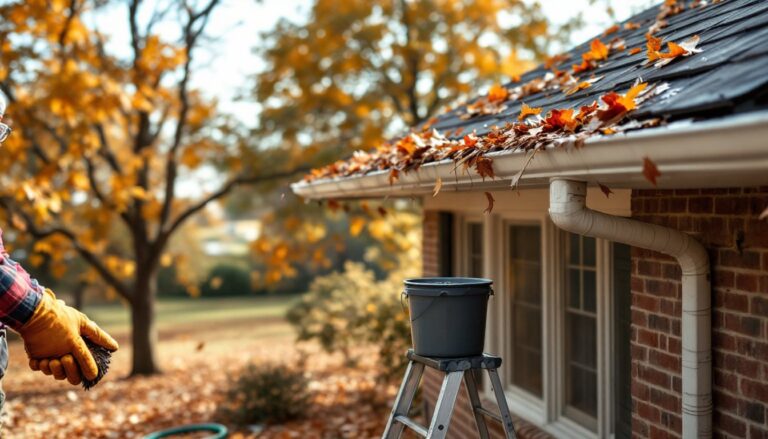
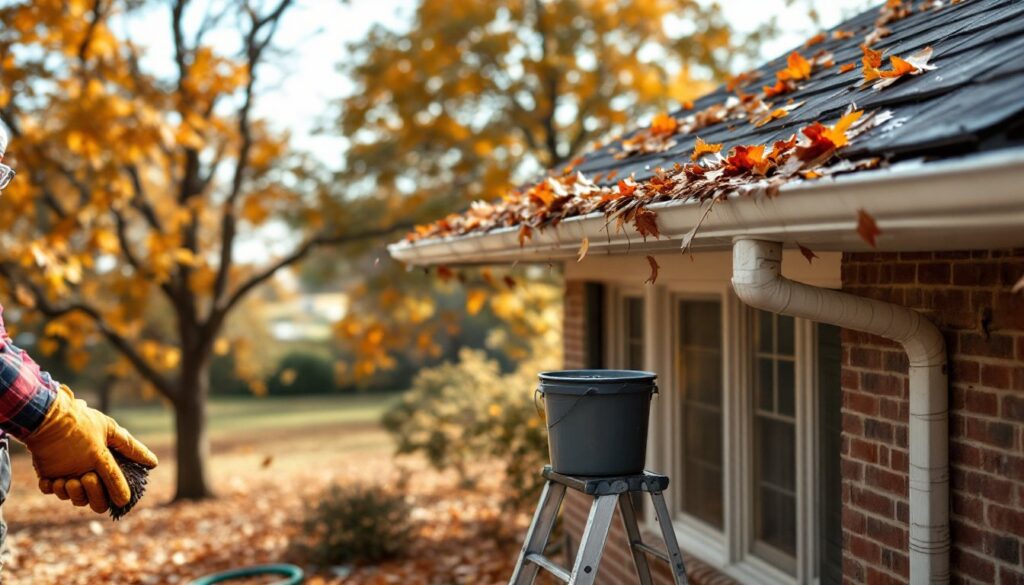
- 5-gallon bucket for debris
- Garden hose with spray nozzle
- Optional: pressure washer (use low pressure: high pressure damages gutters)
Nice-to-haves:
- Gutter guards or screens reduce future cleaning frequency
- Shop towels for drying
- Downspout cleaning tool (thin rod or plumbing snake) for stubborn clogs
That’s it. You’re not buying a contractor-grade system: you’re gathering practical, reusable tools. Many homeowners already own a ladder and hose. A gutter scoop runs $10–20 and lasts years.
Step-by-Step DIY Gutter Cleaning Process
Safety Preparation and Setup
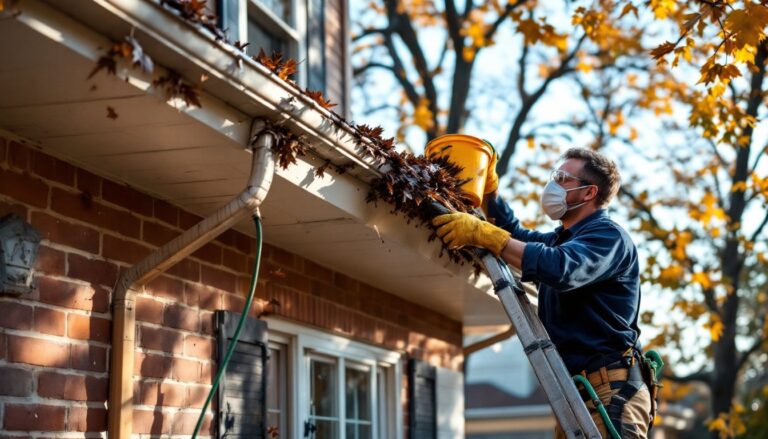
Before you touch a gutter, set yourself up safely. Lean your ladder against the gutter line at a 75-degree angle (not vertical: that’s unstable). Make sure the base sits on level ground, use a board under one leg if your ground slopes.
Have someone spot you, or use a ladder stabilizer to keep the top from shifting. Wear your gloves and glasses now. If you’re over 50 or uncomfortable with heights, seriously consider calling a professional instead, falls from ladders are no joke, and Bloomington contractors are affordable compared to a hospital bill.
Removing Debris and Flushing the System
-
Scoop out the big stuff. Using your gutter scoop or small shovel, work along the gutter length and pull out leaves, twigs, and sediment into your bucket. Start at the downspout end and work backward so debris naturally flows toward the opening you’re already at.
-
Check the downspout. Poke a straightened coat hanger or plumbing snake down the downspout opening to check for clogs. If you feel resistance, you’ve got a blockage. Use the snake to dislodge it, or remove the downspout connection and flush it with a hose (do this over a garden bed, not your foundation).
-
Flush with water. Once big debris is gone, hook up your garden hose with a spray nozzle. Start at the end opposite the downspout and flush water along the gutter. Watch it flow toward the downspout and listen for the sound of water dropping through, that’s your sign it’s clear. If water pools or flows slowly, you’ve still got a clog: repeat the snake step.
-
Check gutter slope. While flushing, notice if water pools in any spots. Gutters should slope about 1/4 inch per 10 feet toward the downspout. If you see standing water that doesn’t drain even after clearing, your gutter may have settled or been installed with poor slope. That’s a job for a professional gutter contractor.
-
Inspect for damage. As you work, look for holes, rust (in steel gutters), separated seams, or sagging sections. Small holes can be patched with gutter repair tape (available at any hardware store), but large damage or separation usually needs professional attention.
When to Call Professional Gutter Cleaners in Bloomington
Not every homeowner should climb a ladder. If you’re uncomfortable with heights, have mobility issues, or live in a multi-story home where gutter access requires a 30+ foot ladder, hire a professional. Bloomington has plenty of options, professional gutter cleaners in Bloomington, IL typically charge $150–$400 per visit depending on home size and debris level.
You should also hire a pro if you find structural issues: sagging gutters, separated seams, rust perforation, or poor slope. These aren’t DIY fixes and attempting them can make things worse. Similarly, if your home has a steep pitch roof or is taller than two stories, the ladder work becomes genuinely risky for a non-professional.
For cost guidance and contractor matching, HomeAdvisor’s cost estimator helps you budget before calling anyone. A professional visit also gives you expert eyes on whether gutter guards make sense for your situation, they reduce cleaning frequency but aren’t a complete hands-off solution in Illinois’s heavy leaf-drop areas.
Budget for professional cleaning annually if you have overhanging trees, or twice yearly if trees hang directly over your roof. Consider it insurance against foundation damage.
Conclusion
Gutter cleaning isn’t complicated, but it demands attention to safety and regular execution. Whether you handle it yourself or hire a pro, the goal stays the same: keep water flowing away from your foundation. In Bloomington’s wet seasons, clogged gutters turn into expensive damage fast. Make it a seasonal habit, use proper safety gear, and don’t hesitate to call a professional if the work feels risky. Your basement (and your wallet) will thank you.