Table of Contents
ToggleGutters don’t get much respect until they fail. Most Cornelius homeowners think about them only when water’s pouring off the roof like a waterfall or they spot dark streaks staining the fascia. But neglected gutters cause real damage, standing water rots fascia boards, debris blocks downspouts, and ice dams form in winter. In the Carolinas’ humid climate with frequent storms and heavy oak pollen, gutters fill faster than you’d expect. Whether you’re tackling this yourself or calling a pro, understanding your gutter system’s needs is the first step to protecting your home’s foundation and landscaping from water damage.
Key Takeaways
- Regular gutter cleaning in Cornelius, NC should happen at least twice yearly (spring and fall) to prevent standing water, fascia rot, and foundation damage in the region’s humid climate and heavy oak pollen environment.
- Watch for overflowing water during rain, dark stains on siding, sagging gutters, and pooling water near the foundation as signs that gutter cleaning is needed immediately.
- DIY gutter cleaning requires proper safety equipment including a sturdy ladder, work gloves, goggles, and a helper to spot you—never step on the gutter itself or clean alone at heights.
- Professional gutter cleaning services in Cornelius, NC typically cost $150–$400 for a single-story home and are recommended for multi-story homes, steep roof pitches, or when gutters are heavily clogged.
- Long-term solutions like gutter guards, extended downspouts, and trimmed overhanging branches can reduce debris accumulation and extend the time between cleanings to once annually or less.
Why Regular Gutter Maintenance Matters in Cornelius
Cornelius sits in Mecklenburg County with four distinct seasons, meaning gutters face leaves in fall, ice dams in winter, pollen storms in spring, and heavy afternoon thunderstorms in summer. Clogged gutters can’t direct water away from your home, so it pools against the foundation, seeps into basements, or cascades down the exterior wall. Over time, standing water rots the fascia board (the horizontal trim behind the gutter), compromises soffit vents, and creates an ideal environment for mold and pest infestations.
In North Carolina’s humid climate, debris also settles faster than in drier regions. Leaves from oak, maple, and pine trees accumulate quickly, especially after storms. If you neglect gutters for a season or two, you’re looking at potential repairs costing hundreds of dollars. Regular cleaning, at least twice yearly, ideally spring and fall, is your cheapest insurance policy. A few hours of preventive work now beats expensive structural repairs later.
Signs Your Gutters Need Cleaning
Watch for these telltale signs that your gutters are overdue for attention:
Visible debris or sagging. If you can see leaves, twigs, or granules from the ground, they’re definitely blocking water flow. Sagging sections indicate standing water, a gutter shouldn’t have visible sag.
Overflowing water during rain. When water spills over the edges instead of flowing through the downspout, the outlet is probably blocked. This is the most obvious sign.
Dark streaks or stains on fascia or siding. Water overflow leaves ugly, persistent stains. These streaks follow the water’s path and indicate chronic clogging.
Soggy ground or pooling water near the foundation. If the downspout isn’t extending far enough or is completely blocked, water concentrates around your foundation, promoting erosion and basement seepage.
Pest activity or visible mold. Damp leaves create breeding grounds for mosquitoes, and accumulated organic debris encourages mold growth. If you notice either, your gutters need immediate attention.
Ice dams in winter. If ice builds up along your gutters in winter, blocked gutters may be trapping water that freezes when temperatures drop. This is particularly common in older homes or those with inadequate attic ventilation.
If you’re unsure, climb up safely with binoculars, you don’t need to get on the roof to spot major blockages.
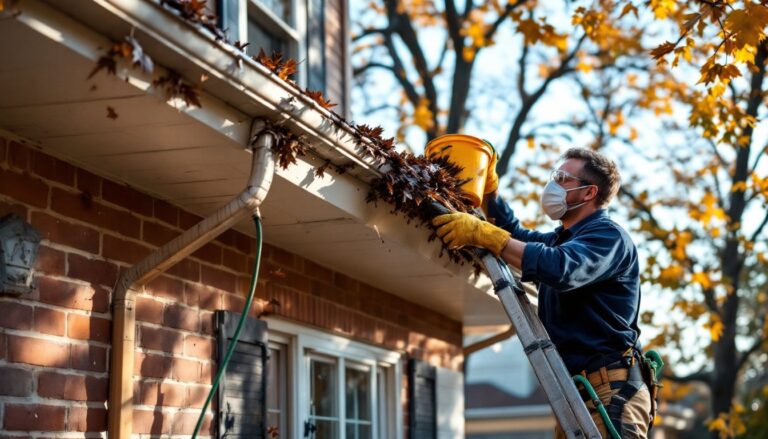
DIY Gutter Cleaning: Steps and Safety Tips
Essential Tools and Materials You’ll Need
• 6-foot or 8-foot aluminum or fiberglass ladder (avoid wood: it’s heavier)
• Gutter scoop or small shovel
• Heavy-duty work gloves (wet leaves are slippery and rough)
• Safety glasses or goggles
• Bucket for debris
• Garden hose with a spray nozzle
• Sturdy shoes with good traction
• Roof harness or safety line (if your roof pitch is steep or gutters are above 15 feet)
• Trowel or putty knife (for stubborn buildup)
• Extension wand for the hose (optional but helpful)
Pro tip: Have a friend spot you. Working alone on a ladder is risky, especially on slopes or high houses.
Step-by-Step Cleaning Process
1. Set up safely. Place your ladder on level ground, perpendicular to the gutter line, and have it firmly planted. The ladder base should sit 3 feet away from the wall for every 4 feet of ladder height (the 3:4 rule). Never lean too far sideways, reposition the ladder instead.
2. Remove large debris by hand. Starting at a downspout (water flows toward it, so work backward), use your gloved hands or a gutter scoop to pull out leaves, twigs, and sediment. Dump debris into the bucket.
3. Flush the gutter. Once the bulk is out, use the garden hose to flush the gutter toward the downspout. This clears fine sediment and reveals any remaining blockages.
4. Check and clear downspouts. Use the hose to flush downspouts from the top. If water backs up, the downspout is clogged, a plumbing snake or pressure washer (used carefully) can dislodge blockages. Never use excessive pressure, as you’ll damage the gutter seams.
5. Inspect for damage. While you’re up there, look for holes, rust, loose fasteners, or sagging sections. Seal small holes with roofing cement: mark larger damage for later repair.
6. Test the flow. Run the hose one more time to confirm water flows freely from both ends of the gutter and exits cleanly through the downspout.
Safety warnings: Wear goggles, debris and water spray are unpredictable. Never step on the gutter or fascia: they won’t support your full weight. If you’re uncomfortable at heights, this is a job to outsource. Don’t clean gutters during or immediately after heavy rain, and avoid working alone. Stop if weather deteriorates.
When to Hire a Professional Gutter Cleaning Service
Not every homeowner should be on a ladder. If your home is two stories or taller, your roof pitch is very steep, gutters are in poor condition, or you’re uncomfortable at heights, hire it done. Professional gutter cleaners have the equipment, insurance, and experience to work quickly and safely.
A few scenarios where outsourcing makes sense: ice dams requiring warm-water treatment, gutters clogged with compacted debris that won’t budge by hand, homes with multiple stories or complex roof lines, or if you have mobility or health limitations.
Cost varies by home size and gutter condition, typically ranging from $150 to $400 for a single-story home in the Cornelius area, though regional and market factors affect pricing. Many professionals offer gutter cleaning services in Cornelius, NC with competitive pricing and warranties. You can also get estimates from platforms like HomeAdvisor to compare quotes and verify contractor credentials before hiring.
Schedule cleaning in spring (after pollen season) and fall (after leaves drop). Reputable services often offer maintenance plans at a discount for biannual cleaning, a smart investment if you own mature trees.
Preventing Gutter Clogs: Long-Term Solutions
Cleaning gutters is maintenance, not a permanent fix. To reduce how often you need to get on a ladder, consider these preventive measures:
Gutter guards or screens. Covers with fine mesh or foam insert keep leaves out while allowing water through. They’re not foolproof (fine sediment still accumulates), but they reduce debris significantly. Quality guards cost $8–15 per linear foot installed, adding up for a full house, but they extend the time between cleanings to once annually or less.
Extend downspouts. Many downspouts empty 4–6 inches from the foundation. Extend them 4–6 feet away (or connect to underground drainage) to move water further from the house. This is cheap and effective.
Trim overhanging branches. Trees directly above the roof dump leaves constantly. Trimming branches back reduces debris by 30–50%, depending on the tree species and season. This requires a certified arborist for large branches over the roof.
Install an undercatch system. Some gutters include a secondary catch tray that makes removal easier, worth asking about if you’re replacing gutters.
According to seasonal maintenance guides, homeowners with mature trees over or near the roof should plan for quarterly inspections during heavy leaf seasons. Combine preventive measures with your twice-yearly schedule, and gutter failures become rare.
Taking Action Now Saves Headaches Later
Gutters may be unglamorous, but they’re essential infrastructure. A little attention twice a year, or hiring a pro to handle it, costs far less than water damage, foundation repair, or pest remediation. If you’re game for the DIY route, stay safe, use proper equipment, and don’t rush. If you’d rather keep your feet on the ground, the investment in professional cleaning is money well spent. Either way, make gutter maintenance part of your regular home care routine, especially here in North Carolina’s wet, leafy climate.