Table of Contents
ToggleA clogged floor drain is one of those household problems that sneaks up on you. One day you notice water pooling around the garage floor or basement drain, and suddenly you’re facing a soggy situation that demands attention. Floor drains are designed to handle water runoff and prevent flooding, so when they back up, it’s not just a nuisance, it’s a potential water damage risk. The good news is that most floor drain clogs can be cleared with basic tools and a bit of elbow grease, without calling a plumber. This guide walks you through the why, what, and how of floor drain cleaning, so you can tackle the job with confidence.
Key Takeaways
- Most floor drain clogs caused by hair, lint, grease, and sediment can be cleared at home using a plumbing snake or the baking soda-vinegar method without professional help.
- Warning signs like slow drainage, musty odors, standing water, or gurgling sounds indicate it’s time for floor drain cleaning to prevent water damage and flooding.
- A hand-crank plumbing snake (costing $15–$30) works well for typical floor drain blockages—feed it slowly, work through resistance, then flush with hot water to clear debris.
- The baking soda-vinegar treatment is gentler on older pipes than commercial drain cleaners and works best for partial clogs caused by grease or soap buildup.
- Prevent future clogs with monthly hot-water flushes, install a strainer basket to catch debris, and maintain the p-trap by running water regularly to keep the seal intact.
- If water still backs up after two cleaning attempts or if you suspect a deeper main drain line issue, call a licensed plumber with camera equipment rather than risk further damage.
Why Floor Drains Get Clogged And When You Need To Clean Them
Floor drains accumulate debris faster than most people realize. Hair, lint, dust, soap scum, and sediment from water all settle in the p-trap or the drain line itself, building up over time. In garages, you’ll also deal with dirt tracked in from outside, oil residue, and grease. Basements and crawl spaces collect mineral deposits and organic matter.
The real problem starts when you ignore the warning signs. Slow drainage is your first clue, water pooling and draining slowly instead of disappearing quickly. A musty or foul smell coming from the drain is another red flag: it means decomposing debris is sitting in the pipe. Some homeowners also notice standing water that won’t drain at all, or hear gurgling sounds when water runs elsewhere in the house.
Most floor drain clogs are cosmetic and fixable at home, but know when to call a pro. If you’ve already tried snaking or chemical cleaners and water still backs up, or if you suspect the issue is deeper in the main drain line, you’ll need a licensed plumber with camera equipment. Also, if your floor drain is tied to a sump pump system, tampering with it without knowing the setup can cause flooding. When in doubt, a quick plumber consultation beats a flooded basement.
What You’ll Need Before You Start
Tools you’ll want on hand:
• Plumbing snake or drain auger (hand crank or electric)
• Adjustable wrench or pliers
• Wet/dry shop vac (optional but very useful)
• Stiff-bristled brush or old toothbrush
• Bucket or large container
• Flashlight or headlamp
• Wire or hook (straightened wire coat hanger works)
Materials:
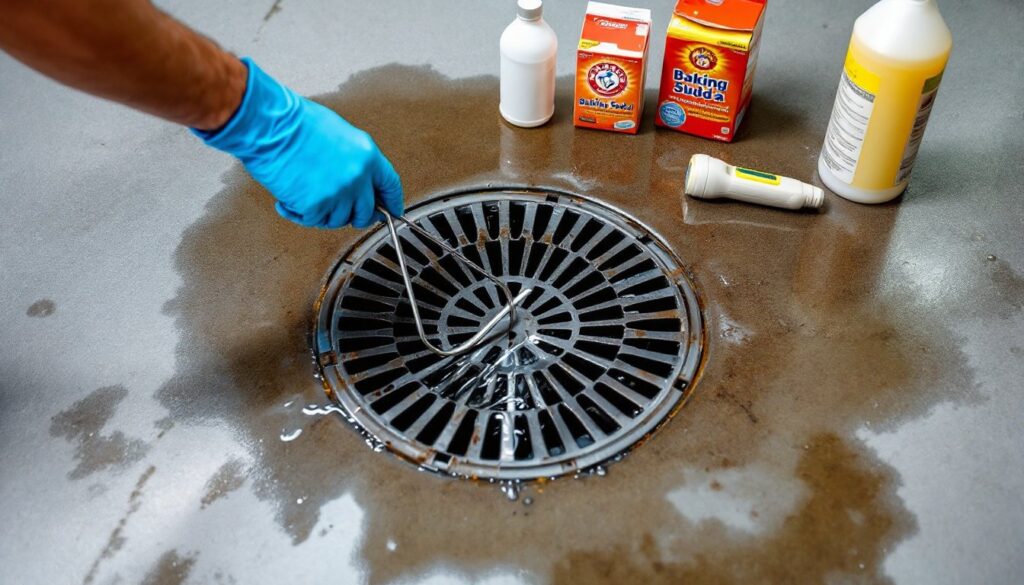
• Baking soda (essential for the chemical approach)
• White vinegar (reacts with baking soda to break down debris)
• Boiling water (loosens grease and flushes sediment)
• Optional: commercial drain cleaner like Drano or Green Gobbler (use only if you’re comfortable with caustic chemicals and follow all label warnings)
Safety gear is non-negotiable:
• Safety glasses or goggles (protect your eyes from splashing water or debris)
• Rubber gloves (nitrile or latex: floor drain water is dirty)
• Dust mask or respirator (if your drain smells particularly foul, you may encounter mold or sewer gases)
• Closed-toe shoes (steel-toed boots preferred in case you drop tools)
Gather everything before you start. Once you’ve pulled the drain grate, you’ll be hands-on and won’t want to stop mid-project to hunt for supplies.
Step-By-Step Floor Drain Cleaning Methods
Using A Plumbing Snake Or Auger
A plumbing snake is your workhorse for floor drain clogs. A hand-crank auger costs $15–$30 and is fine for minor blockages in the first few feet of pipe. An electric drum auger runs $75–$200 and pushes through tougher clogs deeper in the line. For a typical floor drain, hand-crank is sufficient.
Step 1: Remove the floor drain grate or cover. Most screw out counterclockwise, but some pop out: use a wrench if needed. Set it aside on a clean surface.
Step 2: Shine a flashlight into the drain and look for obvious debris, hair clumps, leaves, or buildup around the p-trap opening. Pull out anything you can reach with a wire hook or straightened coat hanger. This step saves you time and prevents the snake from getting tangled.
Step 3: Feed the snake into the drain slowly. Crank the handle clockwise as you push forward. Don’t force it: let the auger do the work. You’ll feel resistance when it hits the clog.
Step 4: Once you hit the blockage, work the snake back and forth a few times, turning the crank to break apart the debris. Pull back slowly, and you should see gunk coming up with the auger.
Step 5: Run hot (not boiling) water down the drain to flush out loosened debris. If water still pools, repeat the snaking process. According to guidance on floor drain cleaning techniques, most homeowners solve their problem in one or two passes.
Pro tip: A wet/dry shop vac placed over the drain opening catches debris as the snake pulls it up, making cleanup easier.
The Boiling Water And Baking Soda Approach
This method works best for slow drains caused by grease, soap, or minor sediment buildup. It’s less aggressive than a snake and won’t damage older pipes.
Step 1: Remove the grate and pull out any loose debris by hand.
Step 2: Pour 1 cup of baking soda down the drain opening. Let it sit for 10–15 minutes: it’ll settle into the pipe.
Step 3: Heat 2–3 cups of white vinegar until steaming (not quite boiling). Slowly pour it down the drain. You’ll see fizzing and hear bubbling, that’s the chemical reaction breaking down buildup.
Step 4: Cover the drain opening with the grate or a wet cloth for 30 minutes. This keeps the reaction working in the pipe.
Step 5: Boil a kettle of water and carefully pour it down the drain to flush. Repeat the baking soda-vinegar treatment if needed.
For stubborn grease clogs, floor drain maintenance advice suggests this method can be more effective than commercial drain cleaners because it doesn’t erode older cast-iron pipes. The downside is it takes longer and works best on partial clogs, not complete blockages.
Prevention Tips To Keep Your Floor Drains Clear
Once you’ve cleared the clog, don’t wait until water pools again to take action. A little maintenance keeps floor drains flowing and saves you from repeating this job.
Monthly flush: Pour a pot of hot water down each floor drain once a month. This washes away settling sediment and prevents grease from accumulating. It costs nothing and takes two minutes.
Install a strainer basket: Floor drain grates let debris slip through. A removable stainless steel strainer basket ($5–$15) sits just inside the drain opening and catches hair and lint. Clean it weekly in areas with high traffic.
Vacuum regularly: In garages and basements, sweep or vacuum around the drain opening to keep dirt from being tracked into the pipe. This is especially important in garages where oil residue and road salt accumulate.
Watch what goes down: Never deliberately pour grease, paint thinner, or other chemicals down a floor drain. Use a floor drain only for water and light dust cleanup. Professional guidance on when to call a plumber emphasizes that chemical spills can damage your municipal sewer system and your own pipes.
Check the p-trap: Many floor drains have a p-trap (a U-shaped section of pipe underneath). In winter or during long periods of disuse, the trap can dry out, allowing sewer gas to seep back into the basement. Run water down the drain every month or two, even if you’re not using that space actively. This keeps the trap filled and maintains the seal.
Conclusion
Floor drain cleaning isn’t complicated, and most clogs respond to a plumbing snake or a simple baking soda-vinegar treatment. Start with the least invasive method, stay safe with proper PPE, and don’t skip prep work like removing visible debris. With a little preventative care, monthly flushing and a strainer basket, you can keep your floor drains clear for years. When a clog won’t budge after two good attempts, or if water pooling returns within weeks, that’s your signal to call a licensed plumber.