Table of Contents
ToggleEden Prairie homeowners know that Minnesota winters are no joke, and neither is gutter maintenance. Over time, leaves, debris, and sediment accumulate in your gutters, blocking water flow and inviting damage to your fascia, soffit, and foundation. Gutter cleaning isn’t glamorous, but it’s one of those preventative tasks that saves thousands in repairs down the line. Whether you’re tackling this project yourself or hiring help, understanding the process ensures your gutters stay functional year-round.
Key Takeaways
- Regular gutter cleaning in Eden Prairie prevents water damage, foundation issues, and pest infestations caused by Minnesota’s heavy snowmelt and seasonal debris accumulation.
- Clean gutters twice yearly—in spring and fall—to avoid standing water that accelerates rot in fascia and soffit while protecting your home’s structural integrity.
- Gutter cleaning requires basic safety precautions: a stable ladder, heavy-duty gloves, proper eye protection, and a dust mask to guard against mold spores and bacteria.
- Hand-scooping debris into a bucket removes 90% of blockages; follow up by flushing with a garden hose to test water flow and identify sagging sections or downspout clogs.
- Hire a professional gutter cleaner if your home exceeds 35 feet, you discover structural damage like rotted fascia, or you’re uncomfortable working at heights.
Why Regular Gutter Cleaning Matters for Eden Prairie Homes
Eden Prairie’s climate brings heavy spring snowmelt, summer storms, and falls full of oak and maple leaves, all of which end up in your gutters. When gutters clog, water backs up and sits against your home’s wooden components. This standing water accelerates rot in fascia boards and soffit, potentially compromising your home’s structural integrity and leading to expensive replacement work.
Clogged gutters also direct water away from the downspouts, causing it to cascade beside your foundation. Over multiple freeze-thaw cycles typical of Minnesota winters, this moisture can seep into your basement or crawl space, fostering mold growth and weakening your foundation. Regular cleaning, at least twice a year, ideally in spring and fall, prevents these cascading problems.
Many homeowners also notice pest infestations tied to debris-filled gutters. Standing water and organic matter attract mosquitoes, and the debris creates nesting spots for birds, squirrels, and even rodents. Keeping gutters clean removes these invitations before they become costly problems.
Tools and Materials You’ll Need
Before climbing a ladder, assemble the right tools and materials:
Essential Tools:
• Ladder: A 24-foot extension ladder works for most single-story homes: 28–32 feet for two-story houses. Check that it’s in good condition before use.
• Work gloves: Heavy-duty leather or nitrile gloves protect against sharp debris edges and bacteria in accumulated matter.
• Gutter scoop or trowel: Specially curved scoops fit gutter profiles better than flat tools, reducing breakage risk.
• Garden hose with spray nozzle: A 50-foot hose reaches most sections without dragging it around repeatedly.
• Bucket: A 5-gallon bucket hung from the ladder with a rope attachment keeps hands free and prevents drops.
• Eye protection and dust mask: Debris kicks up: safety glasses and an N95 mask are non-negotiable.
Optional but Useful:
• Wet/dry shop vacuum with gutter attachment (speeds up debris removal but adds cost)
• Downspout auger or plumbing snake (useful if downspouts clog)
• Pressure washer on low setting (only after hand-cleaning to avoid damaging gutters)
You can rent specialty tools from equipment rental shops if you don’t own them. Most DIYers start with the basic hand-scoop method, which costs minimal money but requires more elbow grease.
Step-by-Step Gutter Cleaning Process
Safety First: Setting Up Your Ladder and Workspace
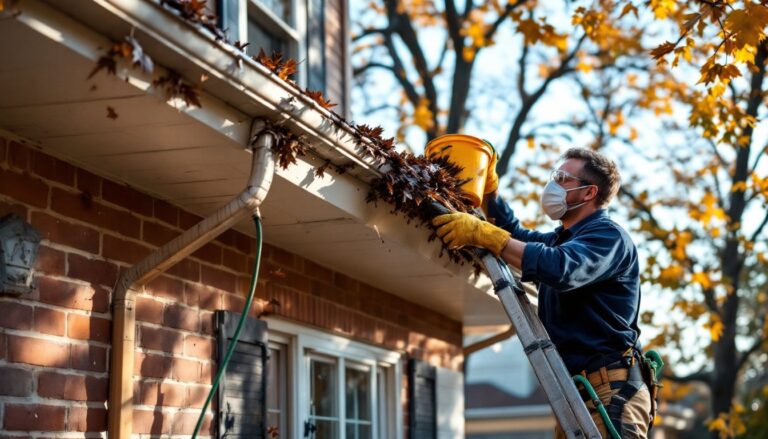
Before you touch your gutters, set yourself up for success and safety. Position your ladder on level, solid ground, never on a slope, gravel, or loose mulch. A helper should stabilize the base while you work, or use a ladder stabilizer bar. Never lean beyond arm’s reach: instead, reposition the ladder every few feet. This single rule prevents the majority of ladder-related injuries.
Wear full eye protection and a dust mask from the start. Gutters harbor bird droppings, mold spores, and decomposing organic matter, none of which belong in your lungs or eyes. Dress in long sleeves and long pants to minimize skin contact with bacteria and debris.
Choose a calm, dry day. Working in wind or on wet surfaces multiplies your fall risk. Early morning is ideal: the sun helps you see debris more clearly and the air is usually calmer.
Removing Debris and Flushing Your Gutters
Start at the downspout end of each gutter run. Use your gutter scoop or gloved hand to scoop out loose leaves, twigs, and sediment into your bucket. Work methodically along the entire run, moving your ladder as needed. Don’t rush this step: thorough hand-scooping removes 90% of the problem.
Once you’ve hand-cleared the gutters, flush them with a garden hose starting from the end farthest from the downspout. Use a moderate spray setting (not full blast) to avoid denting the gutter seams. Watch water flow toward the downspout: it should move freely without pooling. If water pools in spots, you’ve likely missed debris or have a sagging section needing professional attention.
Test each downspout by running water down it. Water should flow steadily out the bottom. If it backs up or trickles, suspect a clog. Use a plumbing snake or hose-end auger to clear it from the top, or call a professional if you’re unsure.
After flushing, do a final visual inspection. Check the underside of the gutter for standing water or soft spots in the fascia board (a sign of hidden rot). Look for separated seams or hangers pulling loose, these need professional repair if structural integrity is compromised.
When to Call a Professional in Eden Prairie
Gutter cleaning is a straightforward task for most homeowners, but some situations warrant professional help. If your home is taller than 35 feet, if you’re uncomfortable on ladders, or if you have mobility issues, hiring someone removes the risk of falls. Professionals have the right equipment, insurance, and experience to work safely at heights.
You should also hire a professional if during cleaning you discover structural damage: rotted fascia boards, bent or damaged gutters, improperly pitched sections, or separated seams. These repairs are different from cleaning and often require carpentry or gutter replacement work that goes beyond DIY scope.
Edge cases like corner-mounted gutters, complex roof designs, or homes with multiple stories are ideal candidates for professional crews. Eden Prairie has several highly-rated contractors: local gutter cleaning professionals in Eden Prairie can handle the job efficiently.
Cost varies widely depending on home size and debris load, but for a ballpark estimate, consult resources like HomeAdvisor or ImproveNet, which offer project calculators and contractor quotes. Even if you plan to DIY, getting a professional estimate helps you understand fair pricing and scope expectations.
If you do hire help, ask whether the quote includes downspout flushing, fascia inspection, and gutter hanger tightening, so there are no surprises at billing time.
Conclusion
Gutter cleaning is a half-day project that pays enormous dividends. By tackling it twice yearly, once after spring snowmelt clears and again after fall leaves drop, you prevent rot, water damage, and pest problems that cost far more to fix. The skills are simple, the tools are inexpensive, and the satisfaction of standing back and knowing your gutters are flowing freely is real. If ladders aren’t your comfort zone, professionals are a phone call away. Either way, don’t skip this one.