Table of Contents
ToggleGutters work quietly most of the year, but in Iowa City, where fall leaves pile up and spring storms dump heavy rain, they become critical to protecting your home. Clogged gutters overflow, water pools against your foundation, and ice dams form in winter. The good news: gutter cleaning is one of the most straightforward home maintenance tasks you can handle yourself, and it takes just a few hours. This guide walks you through the tools, technique, and safety measures to keep your gutters flowing freely.
Key Takeaways
- Gutter cleaning in Iowa City should be done twice yearly—after fall leaf drop and in spring—to prevent water damage, ice dams, and costly foundation erosion caused by the region’s heavy rain and freeze-thaw cycles.
- A gutter cleaning project requires proper safety gear, an extension ladder with stabilizer, and essential tools like a gutter scoop, brush, and bucket, ensuring you work safely and efficiently in 2–6 hours depending on home size.
- When flushing and inspecting gutters, work toward downspouts (not away from them), check for blockages inside downspout openings, and look for signs of damage like rust, holes, or sagging that may need professional repair.
- Schedule professional gutter cleaning if your roof is steep, multi-story, or structurally complex, or if you find fascia rot and separated seams—local Iowa City contractors typically charge $150–$350 for single-story homes.
- Gutter cleaning pays dividends by extending gutter life, preventing rust, and allowing early detection of damage that could otherwise cost thousands in repairs.
Why Regular Gutter Cleaning Matters in Iowa City
Iowa City’s climate, with its four distinct seasons and heavy summer thunderstorms, puts real stress on gutters. Leaves from mature oak and maple trees clog systems every fall, and the thaw-freeze cycles in winter create conditions perfect for ice dams. When gutters back up, water seeps into soffit, fascia, and eventually your attic framing. Foundation erosion and basement leaks follow close behind. A single clogged gutter can cost thousands in water damage repairs.
The fix is simple: clean gutters twice a year, once in late fall after leaf drop and again in spring to clear winter debris and ensure proper drainage before the rainy season. In heavy leaf-fall areas, you might add a midsummer cleaning. Regular cleaning also extends gutter life by preventing rust and allowing you to spot damage early (holes, separated seams, or sagging sections). If gutters are in good shape and draining properly, the payoff in prevented damage far outweighs the few hours spent cleaning.
Essential Tools and Materials You’ll Need
Before climbing a ladder, gather everything on the ground. You’ll spend less time ascending and descending, and you’ll stay safer.
Safety Gear:
• Safety glasses or goggles (debris flies)
• Work gloves (leather or rubber-coated: avoid cloth gloves that snag)
• Closed-toe boots with good grip
• Dust mask if you’re sensitive to mold or debris
Ladder and Support:
• A 20- to 24-foot extension ladder (most two-story homes need this: measure your gutter height plus 3 feet)
• Ladder stabilizer or standoff arms (keeps the ladder from resting on the gutter)
• A helper to foot the ladder
Cleaning Tools:
• Gutter scoop or small shovel (narrow, curved edge fits gutters)
• Stiff-bristled brush (for packed debris)
• 5-gallon bucket with a rope or handle clip (hang it on your ladder rung, don’t hold it)
• Garden hose with pistol-grip nozzle (for flushing)
Optional but Helpful:
• Wet/dry shop vacuum with extension wand
• Tarp to catch debris (easier cleanup)
• Gutter guards (for future prevention, though they still need occasional cleaning)
Check your ladder for cracks or dents before using it. A damaged ladder is a fall waiting to happen.
Step-by-Step Guide to Cleaning Your Gutters Safely
Setting Up Your Ladder and Safety Precautions
Position your extension ladder on level, firm ground, ideally concrete or packed earth, never on gravel or soft mulch. Extend the ladder so the top reaches the gutter with at least 3 feet above it: this gives you something to hold onto and prevents overreaching.
Attach a ladder stabilizer (also called a standoff) to keep the ladder away from the gutter edge and distribute your weight. Set the angle at roughly 75 degrees, the “one foot out for every four feet up” rule works in a pinch. Have your helper hold the base firmly or brace it with stakes.
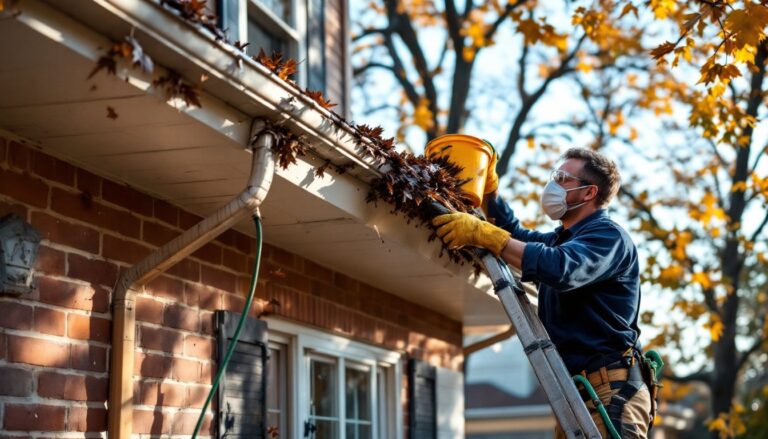
Wear your safety glasses and gloves before you climb. Tie the 5-gallon bucket to a rung using a carabiner or rope loop so your hands stay free. Never carry tools or debris in your hands while on the ladder. Work during daylight and avoid windy days, wind makes ladders unpredictable.
Removing Debris and Flushing Your System
-
Scoop out loose debris. Starting at a downspout, use your gutter scoop to pull leaves, twigs, and silt into the bucket. Work toward the other downspout, not away from it, you’ll push debris into the drain otherwise.
-
Break up packed material. If leaves have matted down and turned into a sludgy paste, use a stiff brush to loosen them. This step is less glamorous but essential: many DIYers skip it and wonder why water still backs up.
-
Check the downspout. Blockages often hide inside downspouts. Feel inside the opening or peer down with a flashlight. If it’s clogged, disconnect the downspout elbow (usually just a couple of screws) and clear it out. A plumbing snake or even a stick works for stubborn clogs.
-
Flush with water. Once the bulk of debris is out, run a garden hose from the far end of the gutter toward the downspout. Use enough pressure to flush remaining silt and test whether water flows freely. You should see water moving steadily toward the drain, not pooling. Watch the downspout to confirm water exits at the bottom.
-
Inspect for damage. As you work, look for holes, rust, or areas where the gutter sags or separates from the fascia board. Small holes can be sealed with gutter caulk, but separated gutters may need new fasteners or brackets. Significant rust or sagging means that section needs replacement.
-
Check your pitch. Gutters should slope slightly toward downspouts (roughly 1/8 inch per 10 feet). If you notice standing water after flushing, the gutter may have settled and lost its pitch. This is a sign you need adjustments or professional help.
Repeat this process on all gutter runs. The whole job typically takes 2-4 hours for a single-story home and 4-6 hours for a two-story.
One practical approach used by many homeowners is to schedule cleaning right after a heavy rain or wind event, when fresh debris is visible and motivation is high. You’ll see the payoff immediately when water drains properly.
When to Call a Professional in Iowa City
Gutter cleaning is DIY-friendly, but certain situations call for a professional. If your roof is steep (over 45 degrees), has multiple stories, or has dormers and valley complexities, the access and fall risk are serious. Professional crews have harnesses, specialized equipment, and insurance.
If you find structural problems, gutters sagging significantly, fascia board rot, or separated seams, a pro should assess whether repair or replacement is needed. Rotting fascia, for example, suggests water has been leaking for months: proper fix requires removing the gutter, replacing the fascia, and reinstalling the system.
Iowa City has several licensed gutter contractors, many of whom can be found through local directories or reviewed on platforms that match homeowners with vetted contractors. Many offer seasonal cleaning packages, which removes the task from your schedule and often costs less per visit than one-off service calls.
If you’re uncomfortable on a ladder, have mobility issues, or lack time, professional cleaning typically runs $150–$350 for a single-story home (regional pricing varies). It’s a reasonable investment for safety and peace of mind, especially if your home has significant tree coverage or complex roof lines.
Conclusion
Gutter cleaning isn’t glamorous, but it’s essential home maintenance in Iowa City’s climate. Two annual cleanings, proper ladder safety, and a methodical approach protect your home’s foundation, roof, and interior from costly water damage. When in doubt, reach out to local professionals, your safety and home are worth the call.