Table of Contents
ToggleA slow or completely clogged drain is one of those household problems that can spiral fast, from a minor annoyance in the kitchen to a backed-up bathroom or wet basement. In Aliso Viejo, where older homes run alongside newer construction, drain issues stem from everything from hair and soap buildup to tree roots and mineral deposits in aging pipes. The good news: you don’t always need to call a plumber on day one. Understanding what’s causing the blockage and knowing which tools to reach for first can save you money and get water flowing again quickly. This guide walks you through diagnosing your drain problem, tackling it yourself when possible, and recognizing when a professional’s the right call.
Key Takeaways
- Drain cleaning in Aliso Viejo requires diagnosing whether the clog is localized to one fixture or affecting multiple drains, as main-line problems need professional attention.
- A standard plunger, hand auger ($15–$40), or baking soda and vinegar solution can resolve most common bathroom and kitchen clogs without calling a plumber.
- Main-line clogs indicated by simultaneous backup in multiple fixtures, sewage smells, or soggy yard patches require a licensed professional with camera inspection equipment.
- Installing drain screens and preventing grease buildup through proper disposal habits are the most cost-effective ways to avoid future drain issues.
- Older Aliso Viejo homes with cast iron or galvanized pipes benefit from professional drain cleaning every 1–2 years to prevent mineral deposits and corrosion.
- If DIY methods fail or you suspect root intrusion, structural damage, or hard water mineral buildup, professional plumbers in Aliso Viejo offer free inspections and handle Orange County code requirements.
Understanding Common Drain Problems In Aliso Viejo Homes
Drain clogs aren’t all the same, and pinpointing the type matters before you start pulling out tools.
Hair, soap scum, and toothpaste accumulate slowly in bathroom drains, often called slow drains rather than complete blockages. You’ll notice water backing up in the sink or tub, but it eventually drains. Kitchen drains, by contrast, tend to clog faster due to grease, food particles, and mineral buildup from Orange County’s moderately hard water. If your entire bathroom or multiple fixtures back up simultaneously, the problem likely sits further downstream in a main line or vent stack, not in a single trap.
Aliso Viejo’s mix of 1970s tract homes and newer subdivisions means pipe materials vary widely. Older homes often have cast iron or galvanized steel main lines that corrode over time, collecting debris. Roots from nearby trees can also infiltrate clay or older PVC pipes if seals weaken. In newer homes with modern PVC, clogs tend to be debris-based rather than structural, making them easier to resolve with simple tools. The key first step is figuring out whether the clog is localized (one fixture) or affecting multiple drains.
DIY Drain Cleaning Methods That Work
Plunger and Snake Techniques
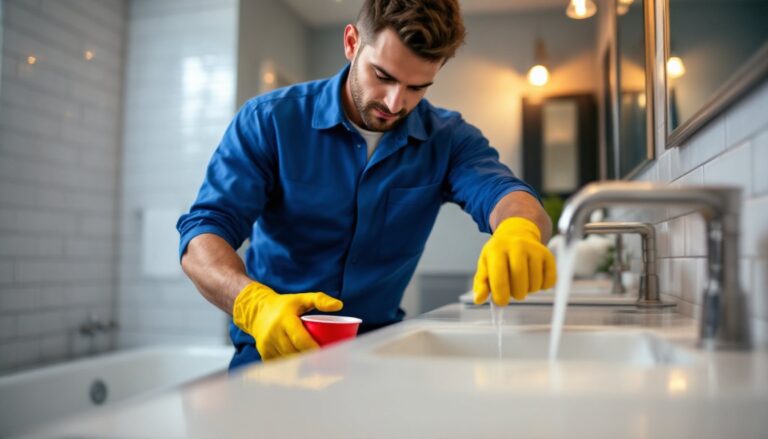
Before chemicals, try mechanical removal. A standard cup plunger works well on sinks: a flange plunger (the kind with the fold-down rubber cup inside) excels at tubs and toilets. Fill the fixture with enough water to cover the plunger cup, block any overflow hole with a wet cloth, and plunge vigorously for 15–20 strokes. Listen for a slurp or whoosh, that’s the sound of the clog breaking free.
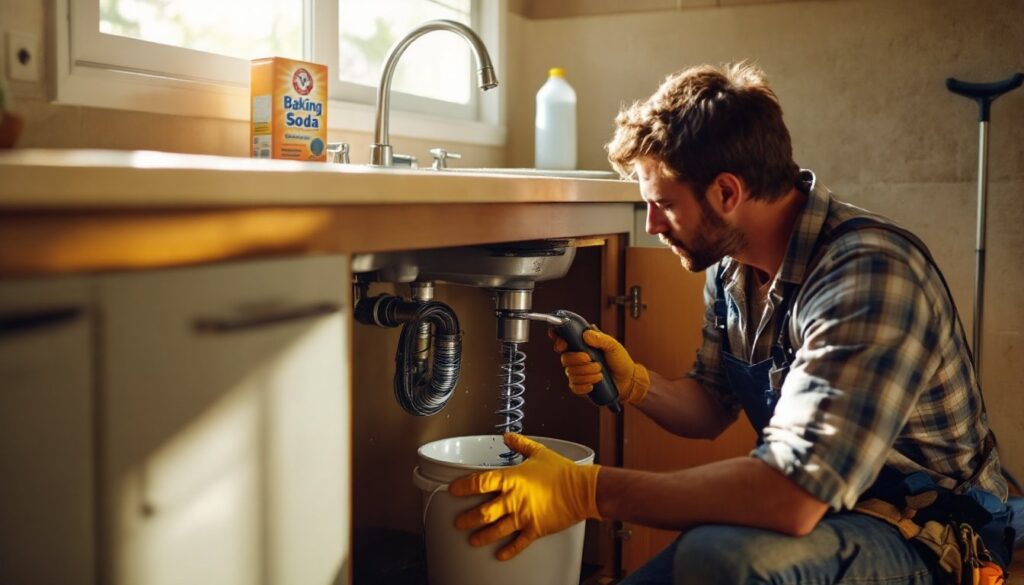
For stubborn clogs, a hand auger (or “drum snake”) is your next step. Feed the auger down the drain while rotating the handle: you’ll feel resistance when it hits the clog. Push through or hook the debris and pull it out. Augers cost $15–$40 for a basic 25-foot model at any hardware store and handle most bathroom and kitchen clogs. Wear nitrile gloves and have a bucket ready for gross water and hair.
If the clog is in a main line, a motorized drain snake (rental around $50–$80 per day) does heavy lifting faster. Feed the snake into your cleanout access point (usually a removable cap near the foundation or in the basement) and let the motor do the work. Brace yourself, these machines have torque and can jerk if the bit snags.
Chemical-Free Natural Solutions
For slow drains or maintenance, skip caustic drain cleaners, they’re harsh, don’t always work, and can damage old pipes. Instead, try the baking soda and vinegar method: pour half a cup of baking soda down the drain, followed by half a cup of white vinegar. Cover the drain and let it fizz for 30 minutes, then flush with boiling water. It won’t clear a full blockage but works great for slow kitchen drains. Repeat monthly as a preventative.
For kitchen grease, hot water alone often clears minor buildups. Pour a kettle of boiling water down the drain slowly, don’t blast it all at once, or the shock can damage PVC fittings. If that doesn’t work, a plunger usually follows. Resources like Family Handyman offer step-by-step tutorials for these approaches and more complex scenarios.
When To Call A Professional Drain Service In Aliso Viejo
Some situations demand a licensed plumber. If your entire house’s drains back up at once, the clog is in the main sewer line, a job for a pro. Similarly, if you’ve tried plunging and snaking and nothing works, there may be a break, collapse, or root intrusion that needs a camera inspection and specialized repair.
Backing up into multiple fixtures (tub, shower, sink, toilet) simultaneously signals main-line trouble. You might also notice sewage smell in the yard, soggy patches near the foundation, or water pooling. These warrant a call to a licensed plumber, not a DIY attempt. Many Aliso Viejo plumbers offer free camera inspections, which show exactly where and what’s blocking the line.
If your home is older than 30 years and you suspect tree root intrusion, professional removal is safer than attempting it yourself, roots can regrow, and aggressive mechanical snaking can break brittle pipes. The top-rated plumbers in Aliso Viejo, CA listed online can handle these diagnostics and repairs efficiently. Permit requirements vary by whether the work is inside or outside the home: a licensed plumber knows your local Orange County codes and won’t leave you with an unpermitted job.
Preventing Future Drain Issues At Home
An ounce of prevention beats an emergency call. Install drain screens in every sink and shower to catch hair and debris before they travel down the line. They cost a dollar or two and are the single best defense against bathroom clogs.
In the kitchen, wipe plates into the trash before rinsing, don’t rely on the garbage disposal as a catch-all. Run cold water while using the disposal (not hot, which liquefies grease) and flush with cold water after. Never pour cooking oil or grease down the drain: let it cool in a container and toss it in the trash. If you notice slow drainage building over weeks, don’t ignore it, address it now with plunging or baking soda before it becomes a full blockage.
If you have an older home, consider a professional drain cleaning every 1–2 years to prevent buildup. Younger homes with good habits can often go much longer. Hard water deposits are common in Aliso Viejo: periodic flushing or occasional use of a weak acid (like citric acid or white vinegar) can slow mineral accumulation. Resources like HomeAdvisor offer cost estimators and maintenance guides for these preventative services.
Conclusion
Most drain clogs can be solved in an afternoon with a plunger, auger, and some elbow grease. Start simple, diagnose accurately, and know your limits, if the clog is in the main line or persists after multiple attempts, call a professional. Regular maintenance and drain screens keep problems from starting. A flowing drain is one of those small victories that makes a home run smoothly.