Table of Contents
ToggleSmall bedrooms don’t have to feel cramped or cluttered. The right space-saving bedroom furniture transforms tight quarters into functional, livable retreats without sacrificing comfort or style. Whether you’re in a studio apartment, a guest room, or a kids’ bedroom, smart furniture choices let you reclaim floor space while adding storage, sleeping surfaces, and work areas. Modern space-saving designs blend practicality with aesthetics, no more cheap-looking compromises. This guide walks you through the best options, how they work, and how to pick what fits your specific needs.
Key Takeaways
- Space-saving bedroom furniture eliminates clutter and floor hazards while improving psychological comfort in small bedrooms that now dominate modern housing markets.
- Multi-functional beds—including storage beds with drawers, loft frames for high ceilings, and Murphy beds that fold vertically—maximize floor space without sacrificing sleeping comfort.
- Wall-mounted and floating furniture like shelves, desks, and hooks uses vertical space to keep floors clear and create an open, less cramped feeling.
- Tall, narrow dressers and wall-mounted nightstands deliver the same storage capacity as traditional pieces while consuming significantly less floor footprint.
- Before purchasing space-saving furniture, measure your room, locate wall studs, plan traffic flow around doors and drawers, and prioritize high-impact pieces like the bed and primary storage solutions.
- Closet organizers and wall niches transform overlooked storage areas with tiered shelving and labeled bins, delivering significant returns with minimal investment of $200–$800.
Why Space-Saving Furniture Matters for Modern Bedrooms
Bedrooms serve more purposes than ever. You sleep there, but you also work, exercise, get dressed, and store everything from seasonal clothes to hobbies. A cramped bedroom makes all of that harder and stress-inducing. Space-saving furniture isn’t just about fitting more stuff into less room, it’s about reclaiming floor space for movement, air, and the breathing room that makes a small bedroom feel pleasant.
The cost of housing keeps climbing, and square footage keeps shrinking. Real estate trends show small bedrooms are now standard in new construction and rentals, especially in urban markets. When you work with the dimensions you have instead of fighting them, you reduce clutter, improve safety (fewer trip hazards), and actually enjoy the space. Practical storage solutions also eliminate the “stacks on the floor” problem that keeps small rooms feeling chaotic.
Beyond function, the psychological benefit of an organized room shouldn’t be understated. A bed that doesn’t dominate the room, walls that do the storing instead of your floor, and furniture that serves double duty all contribute to a sense of calm and control.
Multi-Functional Beds That Double Your Floor Space
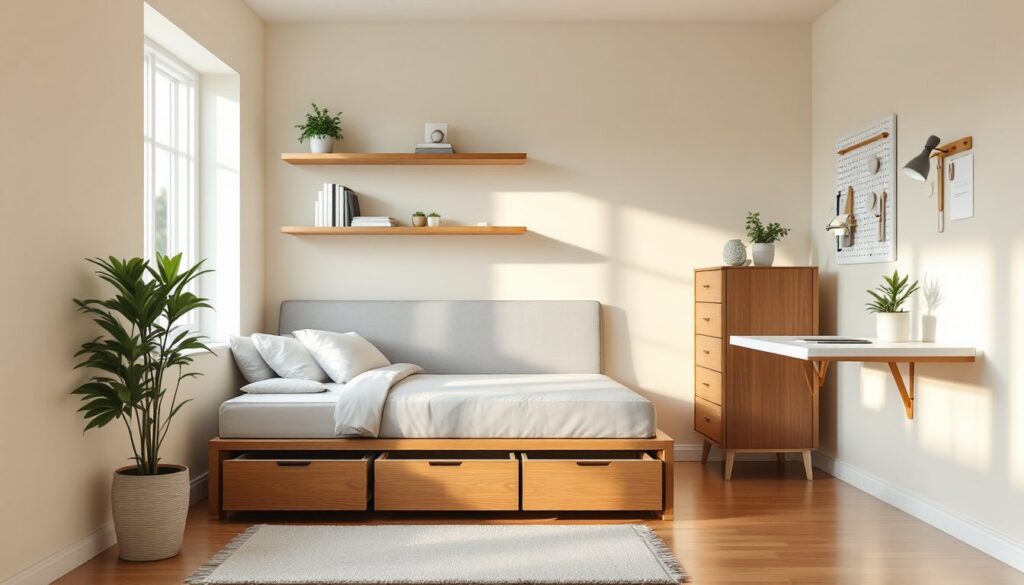
The bed is the biggest furniture piece in most bedrooms, so choosing one that works harder is a smart starting point. A bed with built-in drawers (also called storage beds) slides drawers underneath, hiding off-season clothes, bedding, or linens without taking up any extra floor footprint. These come in standard twin, full, queen, and king sizes and cost roughly 10–20% more than a basic frame, making them excellent value.
Loft beds work best in rooms with at least 8.5-foot ceilings (check yours first, standard 8-foot ceilings won’t work safely). A loft raises the sleeping surface 4–5 feet high, leaving the space below open for a desk, seating area, or additional storage. Loft beds require a sturdy frame and proper guardrails for safety: they’re especially popular in college dorms and kids’ rooms. Assembly takes time and care, and Space Saving Beds for covers adult-sized options in depth.
Murphy beds (wall beds) fold up vertically into a cabinet when not in use, freeing the entire floor. They range from $1,000 to $5,000+ depending on complexity, size, and whether you get a kit or a custom build. A manual flip-down model is simpler and cheaper than motorized versions. The catch: installation requires solid wall framing (a stud wall, not drywall alone), and you need floor clearance in front for the bed to open. These work beautifully in studio apartments and guest rooms where the bed isn’t needed 24/7.
Storage Solutions Built Into Bedroom Walls
Wall-mounted shelving and built-in storage shift the burden off the floor and use otherwise wasted vertical real estate. Floating shelves (mounted on concealed brackets) add storage for books, baskets, or decor without visual bulk. Install them at 12–16 inches apart for standard items, and anchor them into wall studs using heavy-duty brackets rated for the weight you’re storing. A typical 3-foot floating shelf holds 25–50 pounds when properly installed.
Wall niches are recessed shelves built into the wall cavity during framing or retrofitted into existing walls. They’re ideal for bedside storage, displaying plants, or holding a small lamp without needing a nightstand. Retrofitting requires cutting into drywall and potentially rerouting electrical, so consider hiring a pro if you’re not comfortable with drywall repair. This Clever PAX Wardrobe shows clever examples of recessed storage next to wardrobes.
Closet organizers maximize an existing closet’s capacity. Tiered shelving, hanging rods at two heights (one for long items, one for shorter folded pieces), and clear plastic bins transform a chaotic mess into labeled, accessible storage. A closet redo costs $200–$800 in materials and a day of labor, delivering huge returns in usable space. This approach doesn’t add square footage, but it reclaims closet space that’s often overlooked.
Compact Dressers and Nightstands That Maximize Vertical Space
A traditional dresser sits low and spreads wide, consuming precious floor space. Instead, choose tall, narrow dressers (sometimes called “chests” or “highboys”) that stack drawers vertically. A dresser 18 inches wide and 50+ inches tall holds as much or more than a 4-foot-wide, 3-foot-tall unit, using less floor space. Pair it with a wall mount or thin legs to visually lighten the piece.
Nightstands with shelves replace the solid cabinet look with open shelving, making the corner feel less cluttered. A narrow shelf mounted at bedside height (24–28 inches above the floor) plus a small drawer underneath gives you a surface and storage in half the footprint of a traditional nightstand. Wall-mounted options eliminate the legs entirely, making the room feel more open.
Vertical storage units like tall, skinny bookcases (8–10 inches deep, 30–36 inches wide) fit in corners or beside the bed and provide drawer or shelf space without eating into floor area. The key is going up instead of out. Space Saving Furniture guides often highlight this principle across bedroom pieces.
Wall-Mounted and Floating Furniture Options
Anything mounted to the wall frees floor space and creates a sense of openness. Wall-mounted desks are game-changers for bedrooms that double as offices or study spaces. A fold-down desk takes up zero floor space when not in use. A solid mounted desk 24–30 inches deep and 36–48 inches wide provides a proper work surface and is supported entirely by wall brackets anchored into studs.
Floating shelves above the bed replace a traditional headboard while adding display and storage. Install shelves 12–18 inches above the mattress (rough mattress height) using studs or heavy-duty wall anchors. Keep weight to 10–15 pounds per shelf to avoid sagging and ensure everything is secure, no one wants a shelf dropping while they’re sleeping underneath.
Wall-mounted coat racks, hooks, and pegboards tuck jackets, bags, and gear off the floor and out of the closet. A pegboard above a narrow desk or in a corner adds customizable storage for earbuds, phone chargers, small tools, or craft supplies. Installation is straightforward: locate studs, mount a backing board, and add hooks. Space Saving Secrets: Transform elaborates on wall-mounted strategies across the home. Resources like Homedit showcase dozens of small-room design examples with floating furniture.
How to Choose the Right Space-Saving Furniture for Your Bedroom
Start by measuring your room (length, width, ceiling height) and identifying your actual needs. If you work from home, a desk is non-negotiable: if you’re storing seasonal clothes, drawers matter more than decor. Write down your must-haves versus nice-to-haves.
Next, assess your walls. Solid, uninterrupted wall space is prime real estate for mounted furniture or shelving. Check for studs using a stud finder ($15–$40) so you know where to anchor anything heavy. Avoid walls with electrical outlets, pipes, or HVAC vents unless you’re comfortable rerouting them, that’s a job for a licensed electrician or plumber, not DIY.
Consider traffic flow. A bed shouldn’t block the door, and you need at least 18–24 inches of clear floor space in front of a dresser or closet to open drawers and doors safely. Furniture that juts out or is positioned awkwardly creates a cramped, unsafe environment.
Budget matters too. A simple open shelf costs $50–$150: a custom Murphy bed can exceed $4,000. Start with the highest-impact pieces (usually the bed and one storage solution) and add over time. Space-Saving Furniture for Small walks through real-world combinations for apartments. Apartment Therapy also publishes before-and-after small-space makeovers that prove what’s possible.
Conclusion
Space-saving bedroom furniture isn’t a compromise, it’s a smarter approach to modern living. Whether you choose a storage bed, floating shelves, a loft frame, or wall-mounted pieces, the goal is the same: reclaim floor space and function without sacrificing comfort. Measure twice, anchor firmly, and prioritize your real needs over trendy looks. Done right, a small bedroom becomes a calm, organized space that actually works.