Table of Contents
ToggleGutters aren’t glamorous, but they’re among the most important lines of defense for your Greenville home. When leaves, twigs, and dirt clog them up, water backs up and spills over the edges, seeping into your foundation, fascia, and landscaping. In Greenville’s humid subtropical climate, with heavy spring rains and deciduous trees shedding year-round, gutters work overtime. Neglecting gutter cleaning isn’t just a cosmetic issue: it’s a foundation-threatening one. This guide walks you through why gutter maintenance matters in Greenville, when to clean, how to do it safely yourself, and what problems to watch for in our local climate.
Key Takeaways
- Greenville gutter cleaning is critical preventive maintenance that protects your foundation from water damage, especially given the region’s 50 inches of annual rainfall and heavy spring storms.
- Most Greenville homeowners need gutter cleaning at least twice yearly—in late spring and late fall—or three to four times annually if their property is heavily wooded.
- Key DIY safety essentials include using a properly angled ladder, wearing work gloves and safety gear, and never standing on the top rung or leaning too far sideways to avoid falls from height.
- Greenville’s humid subtropical climate accelerates mold growth, gutter sagging from waterlogged debris, and rust corrosion, requiring vigilant maintenance and prompt repairs to seals and fasteners.
- Watch for visual warning signs like sagging sections, water overflowing during rain, granules in downspouts, and water staining on fascia—these indicate you’re overdue for cleaning.
- If you’re uncomfortable on a ladder or have a steep two-story home, hiring a local professional gutter cleaning service is a worthwhile investment that balances safety with home protection.
Why Gutter Maintenance Matters for Greenville Homeowners
Your home’s gutters funnel roof runoff away from your foundation and into downspouts that drain it safely to ground level. When gutters clog, water overflows and pools against your foundation, compromising the structural integrity of your home over time. Foundation cracks, wood rot in fascia and soffit, eroded landscaping, and flooded crawlspaces are expensive problems that start with a neglected gutter.
Greenville experiences an average of 50 inches of annual rainfall, much of it falling during spring thunderstorms and the humid summer months. That volume of water has nowhere to go if your gutters are blocked. Standing water in clogged gutters also becomes a breeding ground for mosquitoes and other pests, and the weight of debris-laden water can pull gutters away from the fascia, a costly repair.
Regular gutter cleaning is preventive maintenance that costs you a few hours of labor and extends the life of your roof, foundation, and exterior wood by years. It’s worth doing right, and doing it often.
When and How Often to Clean Gutters in Greenville
Most Greenville homeowners should clean gutters at least twice yearly: once in late spring (after dogwood and oak trees finish shedding and before summer storms) and again in late fall (after most leaves have dropped). If your lot is heavily wooded, bump that to three or even four cleanings per year, every three months.
Watch for visual signs: sagging gutter sections, water pouring over the sides during rain, visible leaf accumulation, and granules in the downspout are red flags. If you see water staining on your fascia or foundation, you’re already past due.
Greenville’s late-summer heat and humidity also mean gutter debris decomposes and compacts faster than in drier climates, turning loose leaves into a sludgy mass. That compacted debris sheds water poorly and is harder to remove, so don’t put off cleaning just because “it’s only leaves.”
DIY Gutter Cleaning: Tools, Safety Tips, and Step-by-Step Instructions
Essential Tools and Materials You’ll Need
- Ladder (24–28 feet for single-story homes, 32–40 feet for two-story), an extension ladder is safer and more stable than a step ladder for gutter work
- Gutter scoop (plastic or metal) or a small shovel, don’t use your hands alone: debris can hide sharp metal edges and nails
- Heavy-duty work gloves (nitrile or leather)
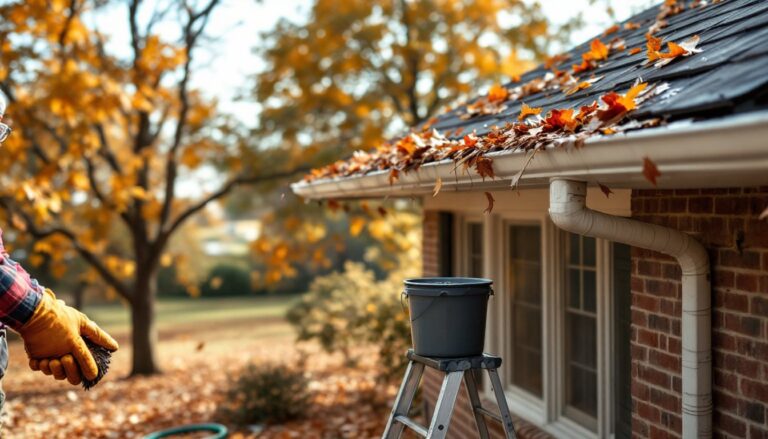
- Bucket (5–gallon) for collecting debris
- Gutter brush or stiff-bristled hand brush to sweep out fine silt
- Safety glasses and dust mask (debris can cloud up when you’re working, and you don’t want dirt in your eyes or lungs)
- Garden hose with a spray nozzle to flush gutters and downspouts after clearing
- Tarp (optional) to catch debris falling below and protect plantings
Safety Precautions Before You Start
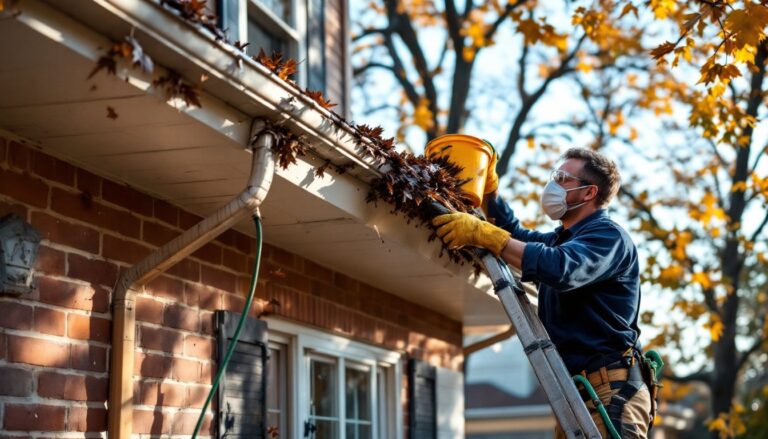
Gutter work happens on a ladder at height, so treat it with respect. Wear non-slip shoes with good ankle support: sneakers are better than sandals or work boots with smooth soles. Always position your ladder against the house at a 75-degree angle, that means the base should be one foot away from the wall for every four feet of ladder height. Avoid leaning too far sideways: move the ladder instead. Never stand on the top rung or top step.
If you’re uncomfortable on a ladder, have a second person steady it, this is a job where a helper is genuinely useful, not just nice to have. If you have a steep roof, a high two-story home, or poor balance, don’t hesitate to hire a professional. A fall from gutter height can mean serious injury or worse.
Before climbing, inspect your ladder for bent rungs, cracks, or loose bolts. Also scan the roof for electrical lines, wasp nests, or loose roofing material that might come down if you brush against the gutter too hard.
Step-by-Step Instructions:
-
Set up your ladder near one end of the gutter run, angled correctly and on level ground. Have your bucket, scoop, and brush within arm’s reach.
-
Scoop out debris starting at the end closest to the downspout. Work toward the opposite end, filling your bucket as you go. Don’t force debris down into the downspout yet, you’ll clear that separately.
-
Brush fine silt and granules with a stiff-bristled brush once the bulk debris is gone. Gutter bottoms collect a layer of silt that can trap water and promote mold growth.
-
Flush the gutter with a garden hose running on medium spray. This rinses out remaining silt and lets you spot any sections that hold water (a sign of sagging or improper slope).
-
Clear downspouts by running water down them and listening for blockages. If water backs up, use a plumbing snake or pressure washer on low setting to break the clog. Never use high-pressure spray on gutters themselves, it can bend aluminum or damage seams.
-
Check for leaks during the final flushing. If you see water running out of a seam, note it for later repair with gutter sealant (silicone works better than caulk for this, as it stays flexible in Greenville’s temperature swings).
-
Empty your bucket and repeat along the full length of the gutter system. Work methodically: rushing on a ladder is how accidents happen.
Common Gutter Problems in Greenville’s Climate
Greenville’s blend of humidity, temperature swings, and seasonal rainfall creates specific challenges for gutters. Mold and mildew thrive in the damp shade of gutter channels, especially on the north side of your home where sunlight doesn’t reach. This isn’t just unsightly: it degrades sealant and speeds the breakdown of gutter material.
Sagging gutters are a frequent issue here because the weight of waterlogged debris, combined with heavy rains and temperature cycling, stresses fasteners and hangers. Aluminum expands and contracts with temperature swings, Greenville sees freezes in winter and 90°F+ heat in summer, and that movement loosens fasteners over time. If you notice a dip in a gutter section, the hanger bolts may be loose. Tighten them with a wrench, but if the gutter itself is bent or damaged, it needs replacement.
Downspout erosion is another local problem. Heavy summer storms create fountain-like overflow at downspout outlets, washing away topsoil and creating drainage channels in your yard. Installing downspout extensions (24–30 inches long) redirects water away from your foundation and prevents erosion at the discharge point.
Rust and corrosion happen faster in Greenville’s humid environment, especially where galvanized steel gutters aren’t properly maintained or where dissimilar metals (copper and aluminum, for instance) are in contact, a recipe for galvanic corrosion. If you spot rust stains or small holes, repair or replace the affected section sooner rather than later.
Because Greenville’s climate is harsh on gutters, homeowners sometimes wonder whether DIY cleaning is worth the effort. Many find that hiring a professional once or twice a year and doing one quick cleaning themselves strikes a balance. If you’re not comfortable on a ladder or have a complex roof, professionals who service Greenville are easy to find through resources like top-rated gutter cleaning pros in Greenville or general platforms such as HomeAdvisor. Getting multiple quotes helps you understand local pricing and what’s included.
Conclusion
Gutter cleaning isn’t glamorous, but it’s non-negotiable maintenance in Greenville. Clean gutters keep water away from your foundation, extend the life of your roof and fascia, and prevent the expensive damage that standing water and debris cause. Whether you tackle it yourself twice a year or hire help, consistency is what counts. Mark your calendar, grab your ladder, and protect your home’s most critical line of defense against water damage.