Table of Contents
ToggleSmall patios don’t have to feel cramped. Whether you’re working with a balcony the size of a postage stamp or a modest backyard, the right furniture choices can transform your outdoor space into a functional, inviting area. Space-saving patio furniture isn’t just about fitting more into less, it’s about choosing pieces that work harder, adapt to your needs, and don’t clutter the space when you’re not using them. From nesting tables that fold away to benches with hidden storage, these solutions help you enjoy outdoor living without sacrificing comfort or style. This guide walks through the best strategies for maximizing your patio footprint while keeping the setup practical and honest about what actually works.
Key Takeaways
- Space-saving patio furniture enables smaller outdoor areas to function as flexible, inviting spaces by choosing multi-functional pieces like storage benches and nesting tables instead of single-purpose items.
- Multi-functional furniture must prioritize build quality—solid wood frames, marine-grade hardware, and durable finishes like sealed wood or powder-coat metal ensure pieces last through multiple seasons of outdoor exposure.
- Nesting tables, expandable dining options, and folding chairs provide the flexibility needed for small patios, allowing you to reconfigure for entertaining or collapse seating completely when not in use.
- Vertical storage solutions such as wall-mounted shelving, hanging planters, and deck-mounted boxes preserve floor space while keeping cushions, tools, and décor organized without creating visual clutter.
- Material choice is critical for durability: teak and composite materials are maintenance-free but costly, while cedar and wood require annual sealing; coastal climates demand corrosion-resistant options like aluminum or stainless steel.
- Build your patio incrementally starting with seating, then add a table and storage as you confirm your actual needs, avoiding impulse purchases that overcrowd compact spaces.
Why Space-Saving Patio Furniture Matters
A cramped patio feels unusable, no matter how beautiful. When furniture eats up every inch, you lose the breathing room that makes outdoor spaces enjoyable. Small yards and compact decks demand intentional design, pieces that pull their weight without creating a cluttered mess.
Space-saving furniture gives you options. You can set up for entertaining on Saturday and reconfigure for a quiet morning coffee on Sunday. This flexibility is especially valuable for renters, seasonal users, or anyone without unlimited square footage. Compact furniture also makes patio maintenance simpler: fewer pieces mean easier cleaning and less to move around.
Beyond function, smart patio furniture choices often cost less overall. A single bench with built-in storage replaces a seating piece and a storage box. A table that nests or expands eliminates the need to buy multiple tables. This efficiency compounds, especially when you’re working with limited budget alongside limited space.
The key is matching furniture to your actual routine. A two-person bistro set makes sense for a tiny balcony: a sprawling sectional does not. Start by honestly assessing how many people actually use your patio at once, what you really do out there, and how much storage you genuinely need. That clarity shapes every choice that follows.
Multi-Functional Furniture That Does Double Duty
The smartest space-saving strategy is buying pieces that serve two purposes. A bench isn’t just seating, it can hide cushions, garden tools, or seasonal décor. A side table becomes a cooler with lift-top design. This approach feels effortless because you’re not cramming extra furniture in: you’re just choosing smarter pieces.
When evaluating multi-functional furniture, check the build quality first. A storage bench made with flimsy particle board will fall apart within two seasons, especially in wet climates. Look for solid wood frames, marine-grade hardware, and quality hinges that won’t rust or bind. Teak, cedar, and composite materials like Polywood hold up best outdoors. Test drawers and lids to confirm they move smoothly and close securely: a floppy mechanism defeats the whole purpose.
Consider the finish, too. Sealed wood or powder-coated metal resist weather much better than bare materials. If you’re not ready to commit to expensive pieces, entry-level resin benches (like those from Keter or similar makers) offer real storage at a lower price point, though they won’t last as many seasons as premium options.
Storage Benches and Ottoman Seating
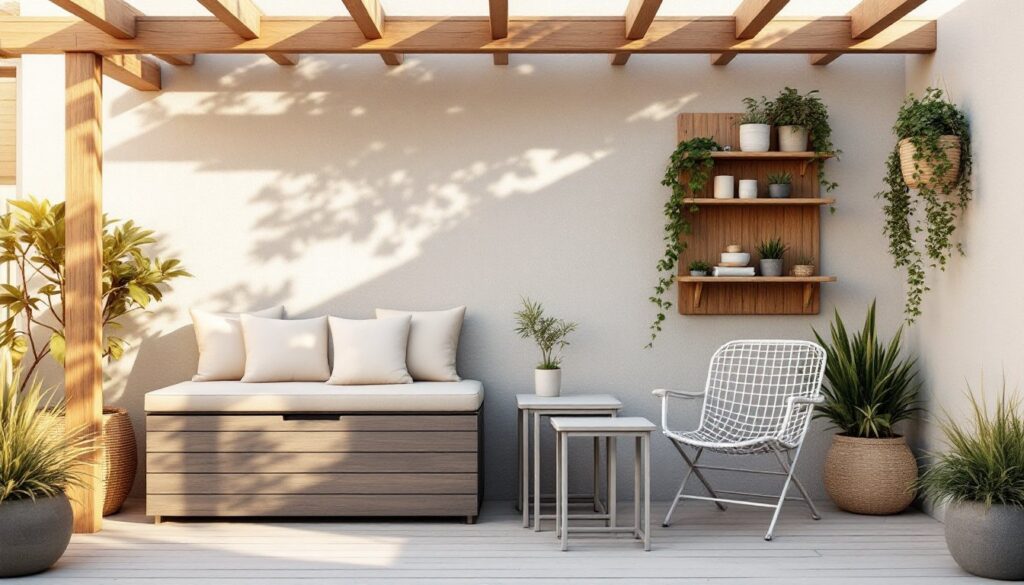
A storage bench is one of the most honest multi-functional pieces you can buy. It provides seating, stashes outdoor textiles and supplies, and anchors the patio visually. Look for benches with at least 12 inches of internal depth to actually store things: shallower designs are mostly cosmetic.
Width matters too. A 48-inch bench fits most compact patios, seats two adults comfortably, and doesn’t dominate the space. Wider benches (60+ inches) work for larger gatherings but consume real estate. Confirm the seat height aligns with other seating: 17–18 inches is standard and pairs well with most tables.
Ottoman seating, especially those with removable cushions and hidden storage underneath, bridges comfort and function. A cube ottoman works as a side table, footrest, or extra seating. Dimensions around 16–18 inches square are versatile without being bulky. These are especially valuable on balconies where every piece earns its place.
Nesting Tables and Expandable Designs
Nesting tables solve a real problem: you need surface space when entertaining but don’t want tables sitting idle the rest of the time. Three nesting tables stack into one compact footprint, then pull apart to surround seating or spread across the patio as needed.
Material choice is critical here. Metal frames with tempered glass tops are elegant and easy to clean, but glass breaks if a table tips. Solid wood or composite tops resist breakage and hide dirt better. Look for tables with non-slip pads on legs to prevent sliding on smooth surfaces.
Expandable dining tables are worth the investment if you actually entertain. Models that extend from 36 inches to 48–60 inches let you host dinner without the table consuming your entire patio when it’s just family. Confirm the extension mechanism moves smoothly and the leaf stores nearby, not in a garage you have to access every time.
For smaller spaces, pairing a nesting side table with a compact bistro dining set gives you flexibility without the footprint of traditional furniture arrangements. You’re building a patio that adapts to your day.
Folding and Stackable Options for Flexible Patios
Folding chairs and stackable seating offer pure flexibility. When guests leave, they collapse into a closet or lean against a wall. This is the reality of small-space living, and it works well if you choose sturdy pieces.
Metal folding chairs (aluminum, typically weighing 3–5 pounds each) are durable and lightweight. They won’t tip as easily as plastic, and they handle moisture better over time. Look for reinforced joints and locking mechanisms that feel solid when the chair is open: wobbly locks invite accidents.
Stacking chairs work the same way, they nest together when not in use. The advantage over folding is that stacked chairs look intentional, not like forgotten lawn furniture. Resin or composite stackers are lighter and more weather-resistant than metal in most cases, though they show dirt more easily.
Consider your climate when choosing materials. In humid regions, metal chairs can corrode if frames aren’t sealed. Resin and composite resist moisture naturally. Test-sit a few models before buying: cheap folding chairs feel flimsy and tire your back after 20 minutes. A slightly pricier option with padded seats or contoured backs makes outdoor time actually enjoyable.
Stacking systems have limits, though. You can’t hide seating completely, and stacks lean against walls or inside storage sheds. If your patio is truly compact, folding works better than stacking, the footprint is smaller, and you can tuck a folded chair into a closet.
Vertical Storage and Wall-Mounted Solutions
When floor space is gone, move up. Wall-mounted shelving, hooks, and hanging storage keep cushions, tools, and décor off the ground without eating into seating area.
Wall-mounted shelving (often 24–36 inches wide and 10–12 inches deep) holds folded cushions, small pots, and decorative items. Install shelves 16–18 inches above the patio floor to avoid bumping your head, and use heavy-duty anchors rated for your wall material. Concrete walls need concrete anchors: wood studs need lag bolts. Most patios are not load-bearing structures, so check your home’s plans before attaching anything structural.
Hanging planters suspended from a patio pergola or overhang save ground space while adding greenery. Tall, narrow plant stands (24–30 inches tall, 12–15 inches wide) tuck into corners and don’t obstruct sight lines. A corner plant stand + wall-mounted shelf combo creates a surprisingly large storage footprint without feeling cluttered.
Deck-mounted storage boxes (the kind bolted to a railing or patio edge) are rigid and weatherproof. They run $150–400 depending on capacity, but they’re built for outdoor abuse. Confirm the hinges are stainless steel or coated to prevent rust, and ensure the latch is user-friendly, you shouldn’t need two hands and a prayer to open your own storage.
Hooks and S-rings mounted on siding or a pergola hang small items: plant hangers, garden tools, even a fold-up bistro table on the underside of a patio roof overhang (though confirm the overhang is sealed and won’t cause mold). This vertical approach feels intentional rather than cramped.
Choosing the Right Materials and Durability
Material choice determines whether your patio furniture lasts three years or thirteen. Outdoor furniture takes real abuse, sun exposure, rain, temperature swings, and salt air (if you’re near the coast).
Teak wood is the gold standard for weather resistance. It ages to a silvery gray, doesn’t rot, and doesn’t need sealing. It’s also expensive ($400–800+ for a bench). Teak works if you see your patio as a long-term investment.
Cedar and Douglas fir are affordable alternatives if sealed annually. They resist rot better than pine but still need maintenance. A deck sealer or exterior stain ($20–50 per gallon, covering roughly 350 square feet) applied every 12–18 months keeps them sound. This is work: calculate whether you’re willing to do it.
Composite materials (often made from recycled plastic and wood fiber) don’t rot and require no sealing. They cost more upfront ($200–400 for a bench) but save labor over time. Some composites fade or stain more visibly than wood: ask the manufacturer for durability specs. Polywood and Trex are reliable composites built for outdoor use.
Metal frames (aluminum or steel) resist moisture well, especially with powder-coat finishes. Aluminum is lighter and won’t rust: steel is stronger but can corrode if the finish is scratched. Stainless steel and marine-grade hardware prevent rust, but they cost more.
Resin and plastic are budget-friendly and lightweight, but they’re the least durable. Direct sun can cause warping and fading within 5–7 years. They work for renters or temporary setups, not permanent installations. Similarly, sources like The Spruce and Southern Living emphasize that quality materials pay dividends over seasons.
Weather your region’s actual conditions carefully. Coastal climates demand corrosion-resistant materials. Hot, sunny climates need fade-resistant finishes. Cold winters might require pieces you can bring inside or cover. There’s no universal “best” material, only the right material for your climate and commitment level.
Remember that cushions, even outdoor-rated ones, have shorter lifespans than frames. UV-resistant fabrics fade slower, but they still fade. Plan on replacing cushion covers every 3–5 years. Storage benches and ottomans with removable cushions let you refresh just the textile, not the whole piece.
When researching products, check customer reviews specifically for durability complaints. A chair praised for comfort but griped about for rust appearing after one season isn’t a win for you. Look for patterns in feedback: one complaint is an outlier, but multiple reports of peeling paint or cracking plastic signal a real issue.
Making Your Small Patio Work
Small patios challenge you to choose carefully, but that constraint is also your advantage. You’re not fighting clutter or maintaining unnecessary pieces. Every item on a compact patio earns its place.
Start with honest inventory: How many people actually use the space? What activities matter most, dining, lounging, gardening? Then layer in pieces that serve those purposes without overshooting. A storage bench, a folding chair, and a nesting side table handle most scenarios without overwhelming the space. Space-saving furniture for small apartments applies these same principles indoors, and the logic transfers directly outside.
Build gradually. Don’t buy a whole set at once. Start with seating, add a table when you’re sure of the size, then invest in storage once you know what you actually need to keep on hand. This approach saves money and prevents impulse buys that don’t fit your space or routine.
Invest in quality frames but plan to replace cushions and soft goods. Treat your patio like an extension of your home, thoughtfully furnished but not overthought. Small spaces reward intention, not stuff.